Book Appointment Now

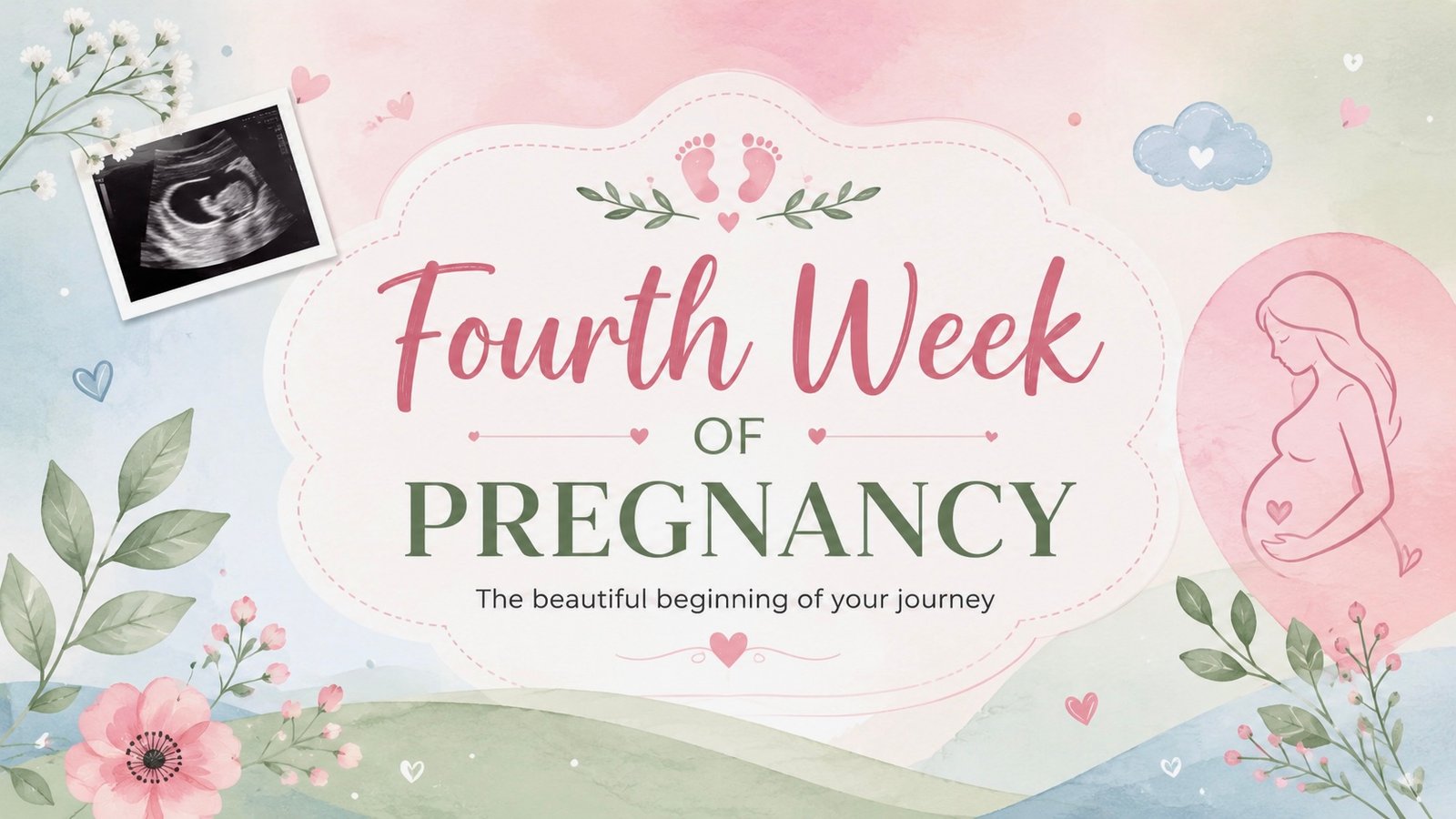
4th Week Of Pregnancy : What Happens to Your Body and Baby
Introduction
Congratulations, Mom!
Things are officially getting real. your uterus has now welcomed your future baby. At just 4 weeks pregnant, a tiny new life is settling in, and although your baby is still microscopic, incredible changes are already happening inside your body.
The placenta has started forming to nourish your growing baby, while the amniotic sac is developing to provide a safe, protective home. Your pregnancy hormone, hCG, is rising rapidly, which is why your home Urine Pregnancy Test (UPT) is now Positive.
You may also begin to notice early pregnancy symptoms such as mild cramping, fatigue, dizziness, breast tenderness, bloating, or nausea. Every pregnancy is unique, so you may experience several of these symptoms or hardly any at all. Whatever you’re feeling, remember that your body is working around the clock to support this amazing new beginning.
Urinary Pregnancy Test (UPT) -> (+)
By the end of this week, your home urine pregnancy test is usually positive. This happens because your body is producing hCG (human chorionic gonadotropin), the pregnancy hormone made by the developing placenta.
Once implantation occurs, hCG levels begin rising rapidly, roughly doubling every 48 to 72 hours in early pregnancy. Its job is to support the pregnancy by maintaining the hormones your baby needs to grow. A blood hCG test can detect pregnancy earlier than a urine test because it can measure much lower hormone levels.
You may have seen advertisements claiming that certain home pregnancy kits can detect pregnancy up to a week before your expected period. While these tests may work for some women, they can also give a false negative result, meaning you are actually pregnant, but the test still shows a single line because your hCG level hasn’t risen enough yet.
So, if you can, be patient. The most reliable time to do a home urine pregnancy test is on or after the first day of your missed period.
Your Due Date
One of the first questions you’ll probably ask is, “When is my baby due?” Your due date is the estimated day your baby is expected to be born. It is usually calculated as 40 weeks from the first day of your last menstrual period (LMP), even though conception typically happens about two weeks later.
Remember, a due date is only an estimate, not a deadline. In fact, only a small percentage of babies are born on their exact due date. Most healthy babies arrive anytime between 37 and 42 weeks, and that’s completely normal.
Your due date is mainly used to monitor your baby’s growth, plan your antenatal visits, and make sure your pregnancy is progressing as expected. So don’t worry too much about the exact date. Think of it as a helpful guide rather than a fixed appointment. Your baby will choose the right time to make their grand entrance.
Let’s See Week 1 to Week 3 In Short
WEEK 1
Mother’s body
- First day of menstrual bleeding = Day 1 of pregnancy (by obstetric dating).
- The uterus sheds its old lining (endometrium).
- FSH (Follicle-Stimulating Hormone) begins stimulating ovarian follicles.
- Estrogen starts rising.
Baby
- No embryo yet.
- No fertilisation.
WEEK 2
Mother’s body
- Several follicles grow in the ovary.
- One dominant follicle matures.
- Estrogen peaks.
Around Day 14 (in a 28-day cycle):
- LH (Luteinizing Hormone) surge occurs.
- Ovulation happens.
- Egg survives about 12–24 hours.
Fertilisation
If sperm are present:
- Fertilisation usually occurs in the ampulla of the fallopian tube within 24 hours after ovulation.
- Sperm + egg -> Zygote (46 chromosomes).
- If fertilisation occurs:
Day 0 after fertilisation: Zygote forms.
Day 1: 2-cell stage.
Day 2: 4-cell stage.
Day 3: 8-cell stage.
Day 4: Morula (16–32 cells).
WEEK 3
This is the first true week of embryonic life.
Starts secreting hcg, not usually found in urine
Mother’s body
Progesterone remains high.
Corpus luteum is maintained by hCG.
Symptoms
Many women still have no symptoms.
Some notice:
- Mild implantation bleeding
- Mild cramps
- Breast tenderness
- Fatigue
WEEK 4
This is usually when a missed period leads to pregnancy testing.
Embryo
Size:
About 1–2 mm (roughly a poppy seed).
Three germ layers form: ectoderm, mesoderm, endoderm
Ectoderm forms
Brain
Spinal cord
Skin
Mesoderm forms
Muscles
Bones
Heart
Blood vessels
Endoderm forms
Lungs
Liver
Intestines
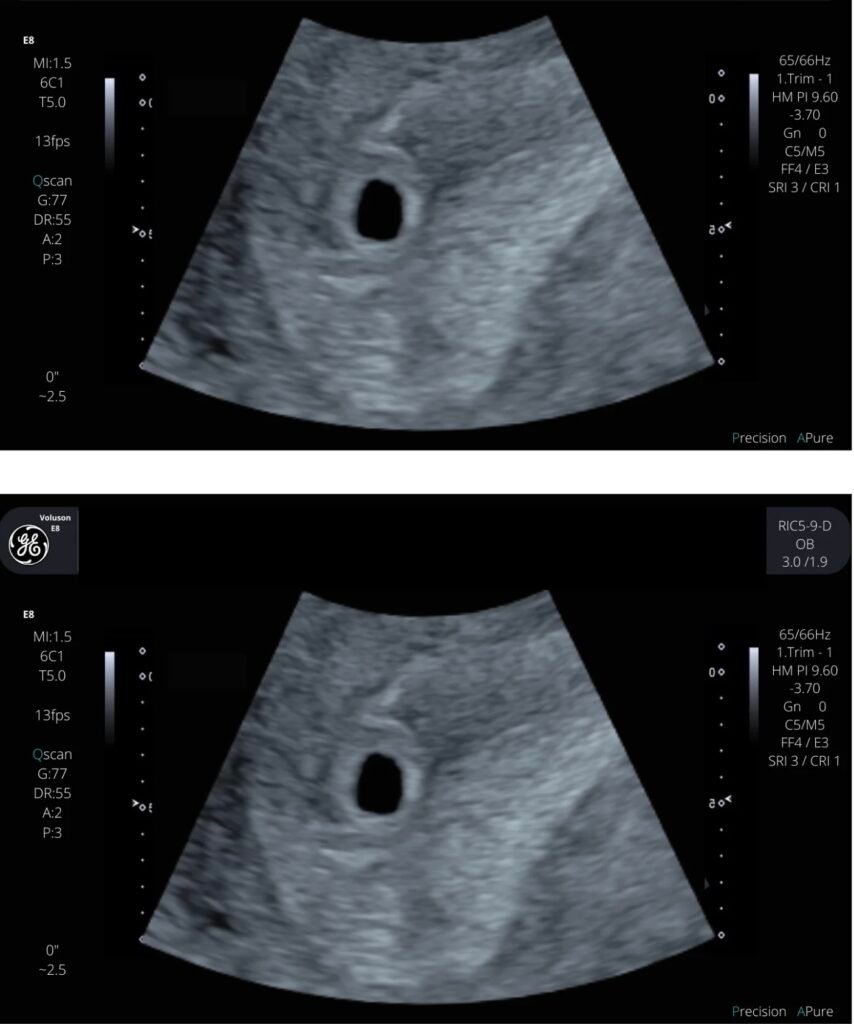
- Amniotic cavity forms
- Yolk sac develops
- Placenta continues to grow
Mother’s body
- hCG rises rapidly (roughly doubles every 48 – 72 hours early in pregnancy).
- Corpus luteum produces progesterone.
- Uterine lining becomes thicker.
- Cervix softens.
Pregnancy test
Urine pregnancy tests often become positive around the time of the missed period.
Blood hCG can detect pregnancy even earlier.
Common symptoms
- Missed period
- Breast soreness
- Fatigue
- Nausea may begin
- Frequent urination
- Bloating
- Increased sense of smell
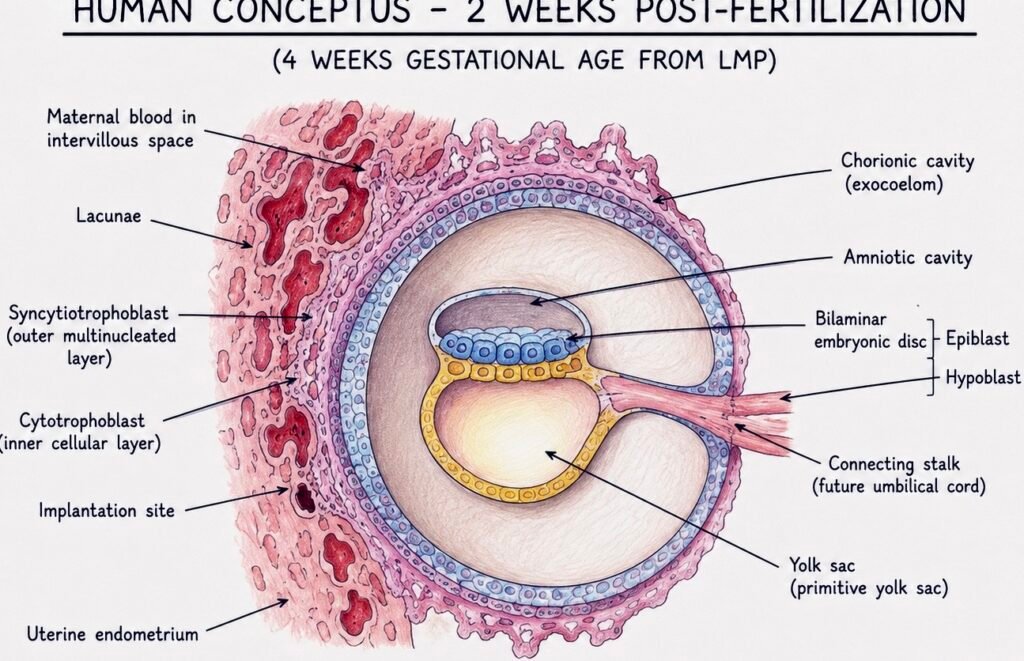
Placenta
One of the most amazing developments happening this week is the formation of your placenta. Tiny cells from your embryo are gently invading the lining of your uterus and creating a strong connection with your body. This process allows small spaces to fill with your blood, forming the foundation of your baby’s future blood supply.
Over the coming weeks, the placenta will grow into your baby’s lifeline, delivering oxygen and nutrients while removing waste products.
Although it is still in its early stages, this remarkable organ is already working behind the scenes to support and protect your growing baby throughout pregnancy.
Amniotic Sac & Yolk Sac
Your tiny embryo is now surrounded by the amniotic sac, a thin protective membrane filled with amniotic fluid. This fluid acts like a natural cushion, protecting your baby from bumps and allowing plenty of room to grow and develop safely throughout pregnancy.
At this stage, your baby also has a yolk sac. Although it is only temporary, it plays a very important role in early development. It provides nourishment before the placenta takes over and helps form the first blood cells. It also contributes to the development of structures that later become parts of the Umbilical Cord, Gastrointestinal System, and Reproductive System. Every tiny change is laying the foundation for your baby’s future.
Implantation
Around this time, the fertilised egg has firmly attached itself to the lining of your uterus, a process called IMPLANTATION.
As it burrows into the uterine lining, tiny blood vessels in the area may be disturbed. This can cause light spotting or mild bleeding, known as implantation bleeding.
Implantation bleeding usually occurs 6 to 12 days after ovulation, often a few days before your expected period. It is typically much lighter than a menstrual period and lasts for a short time. Not every pregnant woman experiences implantation bleeding, so don’t worry if you never notice it. Both are completely normal.
Images
Mother’s Feelings
- Tender, Swollen Breast
- Fatigue
- Nausea and Vomiting
- Gas and Bloating
- Cramping
- Mood Swings
Belly
At 4 weeks pregnant, you almost certainly won’t have a visible baby bump yet. Your baby is still incredibly tiny, so don’t worry if you don’t look pregnant at all. However, you may notice bloating, and that’s completely normal.
The main reason is progesterone, a pregnancy hormone that is rising rapidly. Progesterone helps support your pregnancy, but it also slows down digestion. As a result, you may feel fuller than usual, experience gas, or notice that your jeans or favourite dress suddenly feel a little tighter. If that happens, it’s most likely bloating, not a baby bump.
Every pregnancy is different. Some women feel bloated very early, while others hardly notice any changes at this stage. Both are perfectly normal.
There may not be much to see in the mirror yet, but inside your body, extraordinary changes are already taking place. This is the very beginning of an incredible journey.
So, take a photo of yourself today. You may not see much now, but months from now, you’ll love looking back at where your pregnancy story began.
Tips For Father
Take a moment to absorb the news
This could be the week you find out you’re going to be a father. Feeling excited ? nervous ? or even overwhelmed? That’s completely normal. Write down your thoughts in a journal or on your phone. One day, you’ll look back at these first emotions and realise they were the beginning of an unforgettable journey.
Celebrate your little secret
A positive pregnancy test deserves a celebration, even if you’re not ready to share the news with family and friends. Pick up your partner’s favourite meal, bring home a small cake, or go for a short shopping trip together. Raise a toast with apple juice and celebrate this beautiful milestone, just the two of you. These quiet moments often become the most cherished memories.
Make her life a little easier
Early pregnancy can be physically and emotionally exhausting. Instead of asking, “What do you want for Lunch?” try saying, “Would you like rice or Roti?” Small gestures, thoughtful choices, and simply being present can make a bigger difference than you imagine.
4 week Pregnancy Checklist
- Write your first day of you Last Menstrual period
- Do Home Urinary Pregnancy Test (UPT)
- Contact with your Obstetrician doctor for future visit
- Take vitamin D
- Folic Acid
- Iodine (If recommended)
- Write down if you have any Medical. Condition
- Write down your previous pregnancy. If any complications happened, write it down.
- Eat balanced meals with fruit, vegetable, whole grain, lean protein
- Wash them properly, cook food well.
- Stay well hydrated
- Limit Caffeine consumption
- No Smoking
- No Alcohol
- Contact doctor if you already taking any kinda medicines. Don’t stop or start any drug. Contact with your doctor first
- Aim for 7-9 hours of sleep
Read More : https://www.nhs.uk/best-start-in-life/pregnancy/week-by-week-guide-to-pregnancy/1st-trimester/week-4/