
Book Appointment Now

DAPAGLIFLOZIN : 10 Essential Facts Every Diabetic Patient Should Know
Introduction
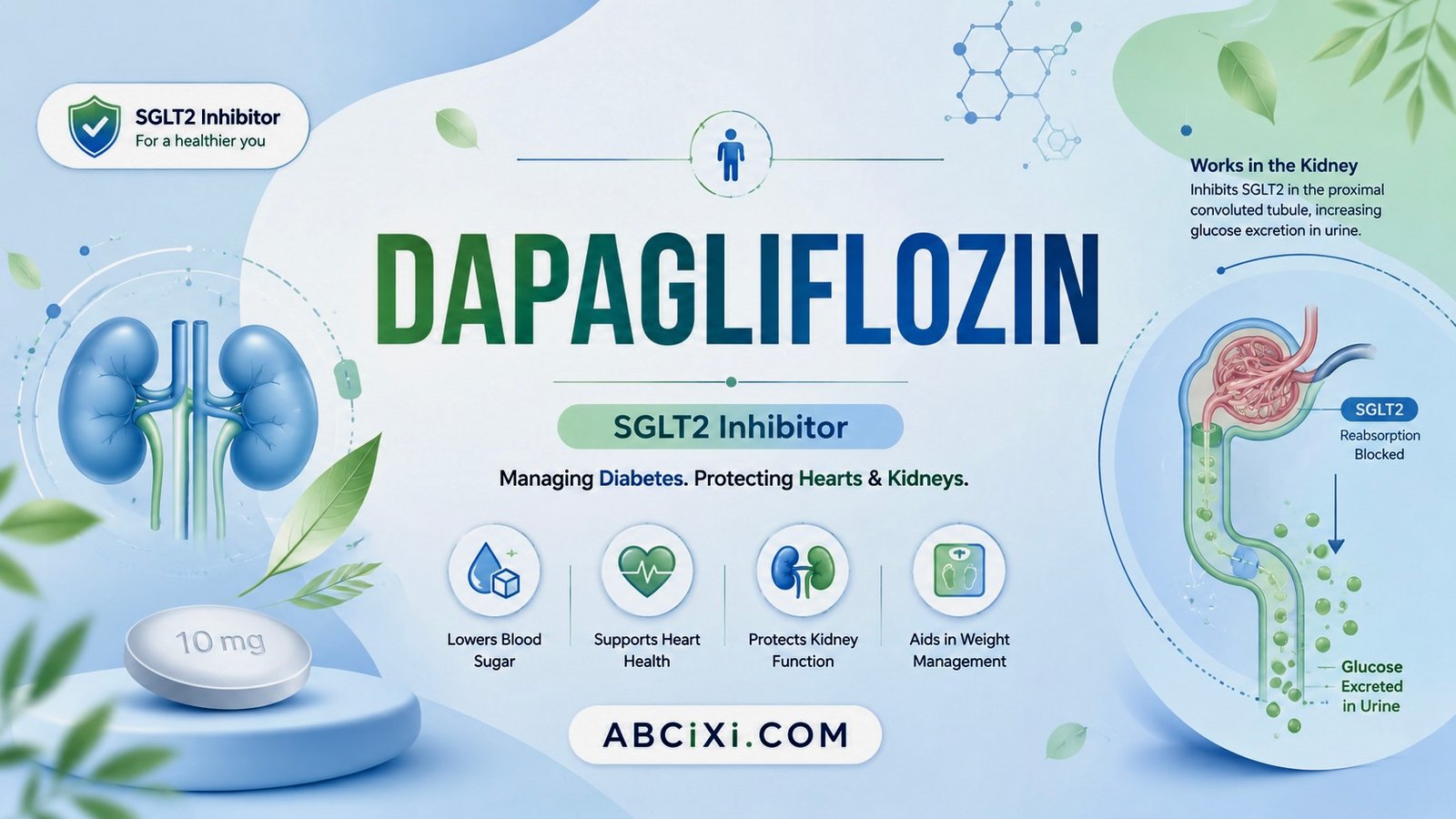
Dapagliflozin is a SGLT-2 (Sodium Glucose Cotransporter 2) inhibitor used with proper diet and recommended exercise for managing high blood glucose levels. It is mainly used for adults with type 2 diabetes mellitus. It also has good effects on heart. All together Dapagliflozin reduces the risk of hospitalisation for a diabetic patient with cardiovascular (Heart) complications. It further reduces the risk of Heart Failure with reduced ejection fraction.
Remember, Dapagliflozin is only used for type 2 diabetes mellitus, not for type 1 diabetes.
Read About All Other Diabetic Drugs
Mode of Action
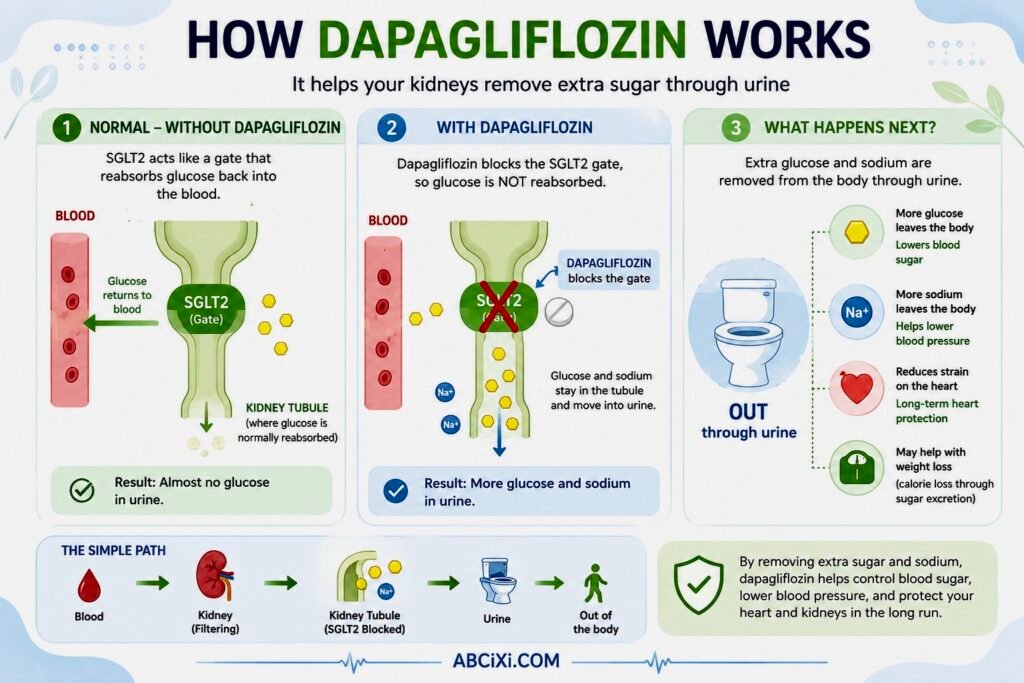
Sodium Glucose Transporter 2 (SGLT2) is mainly present on the proximal convoluted tubules of Nephron (1 million NEPHRON =1 KIDNEY). The main function is to reabsorb the filtered glucose back to the blood vessel, thus increasing the blood glucose value.
Dapagliflozin blocks this transporter (SGLT2). So the glucose is not reabsorbed inside blood vessel.
So where does it go?
Its released through urine out of our body.
So, Dapagliflozin blocks SGLT2, reduces the reabsorption of filtered glucose and lower the renal threshold for glucose, thereby increasing the urinary glucose excretion. Dapagliflozin also reduces the absorption of sodium ions, so more sodium is excreted through urine. This helps is lowering blood pressure and protect the patient’s heart from long term complications.
Side Effects
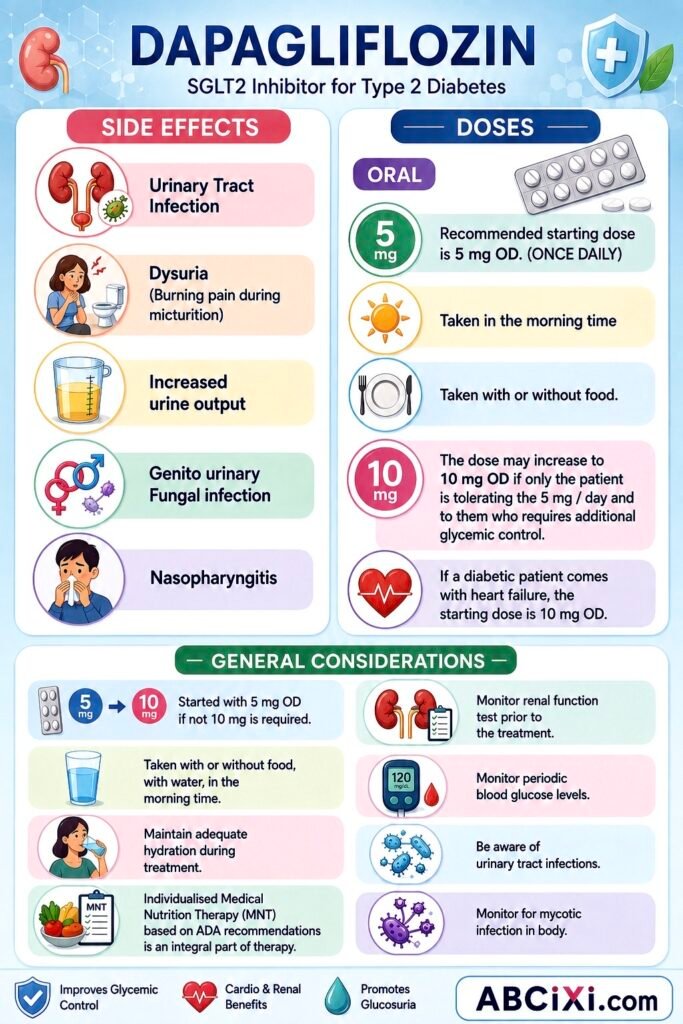
- Urinary Tract Infection
- Dysuria (Burning pain during micturition)
- Increased urine output
- Genito urinary Fungal infection
- Nasopharyngitis
- Nausea
- Vomiting
- Dehydration
- Dizziness
- Hypotension
- Limb and back pain
- Rarely bone fracture
Interactions
- Anti diabetic agents may enhance the hypoglycaemic effects of Dapagliflozin. Monitor carefully.
- SGLT2 inhibitors may enhance the hypoglycaemic effects of Insulin. Consider a decrease in insulin dose when initiating with SGLT 2 inhibitors. Always monitor for Hypoglycaemic effects.
- Direct acting antiviral drugs may enhance the the hypoglycaemic effects of all anti diabetic medications. So need proper monitoring.
Doses
Oral
- Recommended starting dose is 5 mg OD. (ONCE DAILY)
- Taken in the morning time
- Taken with or without food.
- The dose may increase to 10 mg OD if only the patient is tolerating the 5 mg / day and to them who requires additional glycemic control.
- If a diabetic patient comes with heart failure, the starting dose is 10 mg OD.
- Paediatric safety and effectiveness under age of 18 years have not been studied and established. So its not recommended for people <18 years.
Dose Adjustment
Renal Adjustment
If eGFR
>45 – No dose adjustment is required
30 to 45 – Dapagliflozin is not recommended
<30 – Its contraindicated
Hepatic Adjustment
No dose adjustment is required for patients with mild, moderate or severe liver disease.
Pregnancy & Lactation
Pregnancy
It is CONTRAINDICATED in Pregnancy with Diabetes, mainly in 2nd and 3rd Trimesters. The fetus kidney starts developing in 2nd and 3rd trimesters. Using dapagliflozin may interfere with kidney development of fetus.
Lactation
It is unclear whether dapagliflozin can pass through the breast milk or not. So breastfeeding is not recommended in mothers taking dapagliflozin.
Contraindications
- Hypersensitivity to dapagliflozin
- History of Anaphylactic reaction in past
- History of Angioedema
- Patients with eGFR <30
- Patients on Dialysis
Warnings
- Hypotension (Low Blood Pressure) due to volume depletion.
- Using along with other Anti Diabetic drugs
- Genital Mycotic infections
- Urosepsis
- Pyelonephritis
- Fournier’s Gangrene
- Ketoacidosis with Diabetes
- Bone fracture
- Acute kidney injury
General Considerations
- Started with 5 mg OD if not 10 mg is required.
- Taken with or without food, with water, in the morning time.
- Maintain adequate hydration during treatment
- Individualised Medical Nutrition Therapy (MNT) based on ADA recommendations is an integral part of therapy.
- Monitor renal function test prior to the treatment.
- Monitor periodic blood glucose levels.
- Be aware of urinary tract infections.
- Monitor for mycotic infection in body
Read More : https://medlineplus.gov/druginfo/meds/a614015.html