
Book Appointment Now


Diabetic Diet Plan: 10 Essential Tips for Better Blood Sugar Control
Introduction
Being diagnosed with Diabetes can raise many questions, and one of the most common is, “Doctor, What should I eat?” the answer is simple, a healthy diet is one of the most important parts of Diabetes management. Medicines alone cannot keep your blood sugar under control if your eating habits are not appropriate. At the same time, having Diabetes does not mean that you have to stop eating your favourite foods or follow very strict diet.
A diabetic diet is not a special expensive diet. It is simply a balanced way of eating, that helps to maintain stable blood sugar level, while providing your body with all the nutrients it needs. The focus should be on choosing the right food, eating the right potion and maintaining regular meal timing. Small changes in your daily eating habit can make a significant difference in controlling diabetes and reducing the risk of long-term complications. It is also very important to understand that there is no single diet plan that suits every person with diabetes, age, body, weight, physical activity, medication, and other medical conditions, all influence the dietary requirements. Therefore, a Diabetic diet should always be individualised as much as possible.
In this article, we will discuss the principle of a healthy diabetic diet food that should be preferred, food that should be limited,portion control, and practical dietary tips to help you achieve better blood glucose control, and lead healthy life.
Goals of Diabetic Diet
- Achieve and maintain optimal blood glucose.
- Maintain a healthy body weight.
- Provide adequate nutrition.
- Improve insulin sensitivity.
- Prevent acute complications like hypoglycaemia, hyperglycaemia, Diabetes KetoAcidosis.
- Reduce the risk of chronic complications like Diabetic Retinopathy, Diabetic Nephropathy, Diabetic Neuropathy.
- Control associated risk factors such as hypertension, dyslipidemia, obesity.
- Promote Healthy eating habits
- Improve overall quality of life
- Support the effectiveness of the medications and the physical activity
Foods to eat
A healthy Diabetic Diet should include nutrient rich foods that help maintain the stable blood sugar level while providing adequate nutrition. The following foods are recommended :
- Whole grains – Brown rice, whole wheat, oats, barley, millet
- Non-starchy vegetable – Spinach, cabbage, cauliflower, broccoli, cucumber, tomato, capsicum, beans
- Fresh fruit (in moderation) – Apples, guava, pears, berries, kiwi, papaya. Whole fruits are preferred over fruit juice.
- Lean protein sources – Skinless chicken, fish, egg, tofu, Paneer, Daal, beans, lentils
- Healthy fats – Nuts, seeds, avocado, olive oil, mustard oil
- Low fat products – Skimmed milk, low fat curd, low fat yoghurt.
- High fibre foods – Whole grains, legumes, vegetable, fruits with edible skin, flaxseed.
- Sugar-free beverage – Plane water, Coconut water in moderation, unsweetened tea, black coffee without sugar, buttermilk without added sugar
- Healthy snacks – Roasted Chana, sprouts, unsalted nuts, boiled eggs, fresh vegetable salad
- Food with low glycaemic index – These are digested slowly and help prevent rapid spike blood sugar level
Foods to Avoid
- Sugary beverages – soft drinks, packaged fruit juice, energy drinks, sweet tea, sweet coffee
- Refined carbohydrates – white bread, white rice, Maida products, noodles
- Sugary foods – sweet, chocolate, candid, cakes, pastries, cookies, ice cream
- Deep fried foods – French fries, chips, Pakoras, Samosa, fried chicken
- Processed foods – processes meats, instant noodles, packaged snacks
- High fat dairy products – full fat milk, cream, butter, cheese
- Fatty Meals – bacon, sausages, beef & other red meats
- Trans fat containing food – bakery products, doughnut, commercial biscuits.
- Alcohol –beer, whiskey, wine and other alcoholic beverage
- High sodium food – pickles, canned foods, processed snacks, ready to eat meals
Carbohydrates and Diabetes
Carbohydrates are the body’s main sources of energy. When you eat carbohydrate containing foods, they are broken down into glucose which enters the bloodstream. in people with diabetes, the body either does not produce enough insulin or cannot use the insulin effectively. As a result, blood glucose level will rise after the meal.
However, carbohydrates should not be completely avoided. Instead, the focus should be on choosing the right type of and right amount of carbohydrates that are reached in fibres, such as whole grains, oats, legumes, vegetables, and whole fruits, are digested more slowly and cause a gradual rise in the blood sugar level. On the other hand, refined carbohydrates, and sugary foods, such as white bread, sweets, cake, soft drinks, sugar sweetened beverages, can cause a rapid increase in the blood glucose and should be limited.
Portion control is equally important. Eating moderate amount of carbohydrates and distributing them evenly throughout the day, helps to maintain the stable blood sugar level and improve the overall diabetes control
Best Plate method
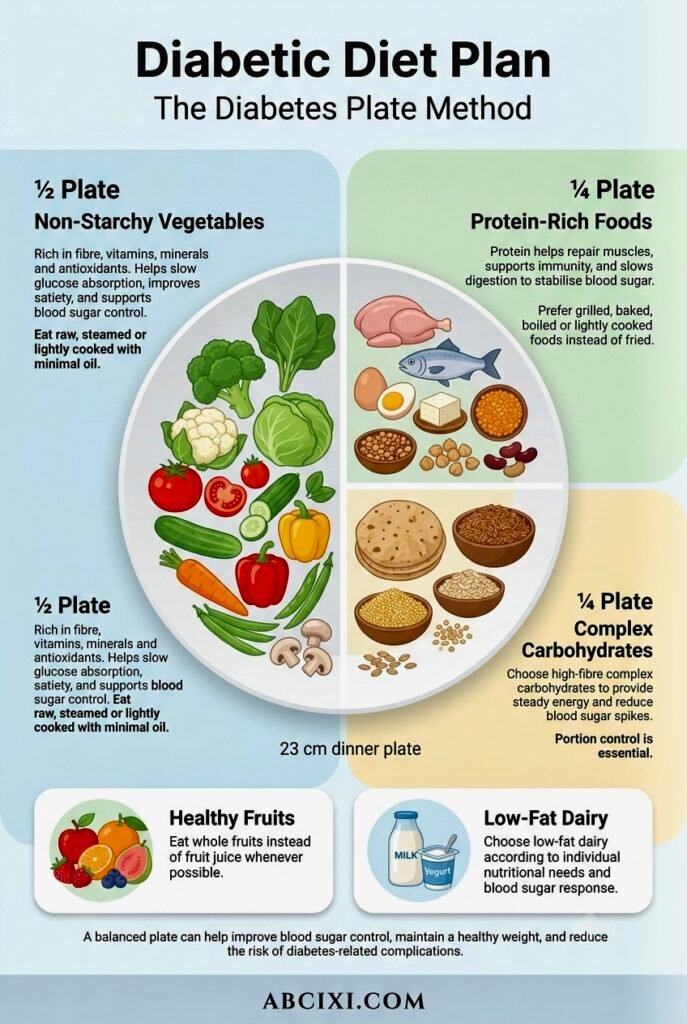
The diabetes plate method is a simple meal planning technique that helps people with diabetes eat balanced meal while maintaining good blood sugar control. It involves dividing a standard 23 cm dinner plate into different sections based on the type of foods.
- 1/2 of the plate – Half of the plate should be filled with non-starchy vegetables, which are low in calories and carbohydrates, but rich in fibres, vitamins, minerals, and antioxidants. This foods help slowdown, glucose absorption, and improve the satiety, meaning you feel fool for longer. Examples include spinach, broccoli, cauliflower, cabbage, tomato, cucumber, carrot, capsicum, green beans, mushroom. This vegetables can be eaten raw, steamed or lightly cooked with mini oil
- 1/4 of the plate – Ome quarter of the plate is reserved for protein rich foods, which are essential for the muscle repair, immune function, and overall body maintenance. Protein also helps stabilise blood sugar by slowing the digestion. Healthy options include skinless chicken, fish, eggs, Paneer, lentils or Dal, beans, chickpeas, and other legumes. Choosing grilled, baked, boiled or lightly cooked preparation is recommended over fried version to avoid excess fat intake.
- 1/4 of the plate – the remaining quarter of the plate is dedicated to carbohydrates, but the focus is on high fibre, complex carbohydrates, rather than refined and sugary foods. These carbohydrates provide energy while causing a slower rise in the blood glucose level. Suitable options include whole wheat roti, brown rice, oats, barley, millets, and other whole grains. Portion control is the section that is specially important for maintaining stable post meal blood sugar level.
A small serving of fruits such as Apple, Berries, Orange, or Guava can be included, preferably eaten whole rather than juice. Low fat, dairy options like milk or yoghurt can also be added, depending on individual need and the blood sugar response.
Meal timing
Meal timing is an important part of diabetes management. Eating meals at regular intervals helps maintain stable blood glucose level and prevent spike or falls in the blood sugar level Skipping meals or eating large amount of food after long period of fasting can make blood sugar control more difficult.
The following recommendations are generally advised to the patients :
- Do not skip breakfast. Start your day with a balanced meal containing carbohydrate, protein and fibre.
- Eat meals at regular time, each day. Maintaining a constant meal schedule helps the body regulate blood glucose, more effectively
- Avoid long gaps between meals. Ideally, there should be about 3 to 4 hours gap between major meals. If required, healthy snacks may be taken between meals.
- Eat smaller, balanced meals rather than consuming one or two very large meals.
- Take meals on time, if you are taking insulin or any kind of diabetes medicines. As delaying meals may increase a risk of hypoglycaemia.
- Avoid late night heavy meals. Dinner should ideally be eaten 2 to 3 hours before bedtime to allow proper digestion and support for better blood glucose control.
- Choose healthy snacks, such as nuts, roasted chickpeas, or low fat yoghart if you feel hungry between meals, instead of sugar or processed food.
A consistent meal schedule, along with a balanced diet, regular physical activity, and prescribed medications, play a vital role in achieving good long-term blood sugar control.
Sample One Day Diabetes Meal Plan
| Time | Meal | Suggested food |
| 7:00 AM – 7:30 AM | Early Morning | 3-4 soaked almonds + 1 glass of warm water |
| 9:00 AM – 9:30 AM | Breakfast | 2 whole wheat roti with Vegetables or Omelettes or Paneer Bhurji + 1 cup non sweet Tea |
| 11:00 AM | Mid Morning Snacks | 1 small Guava or Apple or orange |
| 1:30 PM – 2:30 PM | Lunch | 1 cup brown rice + 1 bowl dal + chicken/fish/paneer + mixed vegetables + salad + 1 cup curd |
| 5:00 PM – 5:30 PM | Evening Snacks | Roasted Chana + green or black tea without sugar |
| 8:30 PM -9:00 PM | Dinner | 2 roti + mixed vegetables + dal + salad |
| 10:30 PM | Bedtime Snacks | 1 glass of low fat milk |
- Drink 2 to 3 L of water throughout the day.
- Avoid sugary drinks and fruit juice.
- Keep meal timing consistent every day.
- Include 30 minutes of physical activity on most of the days.
Common Mistakes
- Skipping meals, specially the breakfast, which can cause blood sugar fluctuation.
- Consuming too many refined carbohydrates, such as white rice, white bread, sweets.
- Eating large portion instead of controlling serving sizes.
- Drinking sugar-sweetened beverages, including soft drinks, fruit juice, and energy drinks.
- Ignoring carbohydrate counting or eating inconsistent amount of carbohydrate.
- Not including enough fibre from vegetables, fruits, legumes and whole grains.
- Choosing unhealthy fats, such as fried foods, butter, ghee in excess and processed snacks.
- Over eating healthy foods, assuming they do not affect the blood sugar.
- Frequent snacking or processed foods, including chips, biscuit, and package snacks.
- Not reading the food levels, leading to excess intake of hidden sugars, sodium, and unhealthy fats.
- Eating late night heavy meals, which may worse and blood glucose control.
- Depending only on medications, while neglecting diet and regular physical activity.
- Following Fad or Crash diet, without consulting a healthcare professional.
- Ignoring adequate hydration, which can affect overall health and blood sugar regulation.
- Not monitoring blood glucose regularly, making it difficult to understand how different foods affect the blood sugar level.
Learn About Medicines Of Diabetes : https://abcixi.com/diabetes-mellitus-medicine/
Tips for Eating outside
- Plan ahead by checking the restaurant menu online and choosing healthier options in advance.
- Do not Skip meals before eating out, as they may lead to overheating.
- Choose grilled, baked, steamed or roasted foods instead of fried items.
- Eat slowly and mindfully, giving your body time to recognise fullness
- Avoid buffet overeating by serving yourself, small portion and avoiding second helpings.
- Limit deserts, or eat minimal, if you choose to have a sweet treat.
- Maintain your regular timing as much as possible to keep blood sugar stable.
- Always carry healthy snacks. In case, there are no suitable food options available outside.
- Monitor your blood glucose, if you are trying a new meal, eating a large meal than usual.
CHOOSE : Grilled, steamed, baked, high fibre, lean protein, plenty of vegetables
LIMIT : Fright foods, sugary drinks, large portions, deserts, refined carbohydrates.
When to see a Doctor or Dietitian
If
- You have persistent high or low blood sugar levels, despite following your meal plan.
- You are newly diagnosed with diabetes and need personalised dietary guidance
- You have unexplained weight loss or weight gain
- You are pregnant or planning pregnancy, specially if you have gestational diabetes or pre existing diabetes.
- You have kidney disease, heart disease, liver disease, or any other medical conditions that require dietary modifications.
- You are starting or changing diabetes medication or insulin, as your meal plan may need adjustment.
- You experience frequent episodes of hypoglycaemia (low blood sugar)
- You need help with meal planning, carbohydrate counting or weight management.
- You have food allergies, intolerance, or follow a vegetarian or vegan diet and need to ensure balance nutrition.
Conclusion
A healthy diabetic diet is not about strict restrictions or giving up your favourite food, it is about making balanced, informed choices every day. By eating the right portions, choosing high fibre foods, limiting added sugars, and refined carbohydrates, staying physically active and maintaining regular meal timing, people can achieve better blood sugar control, and reduce the risk of long term complications. Small consistent lifestyle changes often have a greater impact than drastic diets. Since every person’s nutritional needs are different, it is important to work with your doctor or registered dietician to develop a meal plan that matches your health goals, lifestyle, and medical conditions. With the right approach, diabetes can be managed effectively, allowing you to lead a healthy active life.
FAQ
- What is the best diet for people with diabetes?
The best diabetic diet is a balanced diet reach in vegetables, whole grains, lean proteins, healthy fats, and high fibre foods while limiting added sugar, refined carbohydrate, and processed foods.
- Can people with diabetes eat rice?
Yes. People with diabetes can eat rice in moderation, choosing brown rice or other whole grains with controlling the portion sizes can help minimise the blood sugar spike.
- Are fruits safe for people with diabetes?
Yes. Most whole fruits are healthy because they contain fibre, vitamin and antioxidants. However, fruit juice and dried fruits should be consumed sparingly due to their higher sugar content.
- How many meals should a person with diabetes eat each day?
Most people benefit from three balanced meal with one or two healthy snacks if needed. Regular meal timings help maintain stable blood sugar level.
- Can people with diabetes eat sweets?
Doctors highly recommend not to take any kind of sweets, but yes, very very occasionally, and in small portion. Sweets should be included as a part of total carbohydrate intake and absolutely not consumed regularly.
- Is fasting safe for people with diabetes?
Fasting may not be safe for everyone, specially those taking insulin or certain diabetic medication. Always consult your doctor before fasting.
- Which food should people with diabetes avoid?
People with diabetes should limit sugary drinks, sweets, refined grains, fried foods, processed snacks, and foods high in saturated and trans fat.
- How much water should a person with diabetes drink?
Most adults should aim for about 2 to 3 L of water daily, although individual needs vary depending on age, climate, physical activity, and different kinds of medical conditions.
- Can a diabetic diet help with weight loss?
Yes, a balanced diet combined with regular physical activity can support healthy weight loss, improve insulin sensitivity, and enhance blood sugar control.
- Should I consult a dietician if I have diabetes?
Yes. A registered dietician can develop a personalised meal plan based on your age, weight, activity level, medications, blood sugar goal, and other health conditions.
Read Diabetic Diet : https://www.mayoclinic.org/diseases-conditions/diabetes/in-depth/diabetes-diet/art-20044295