Book Appointment Now

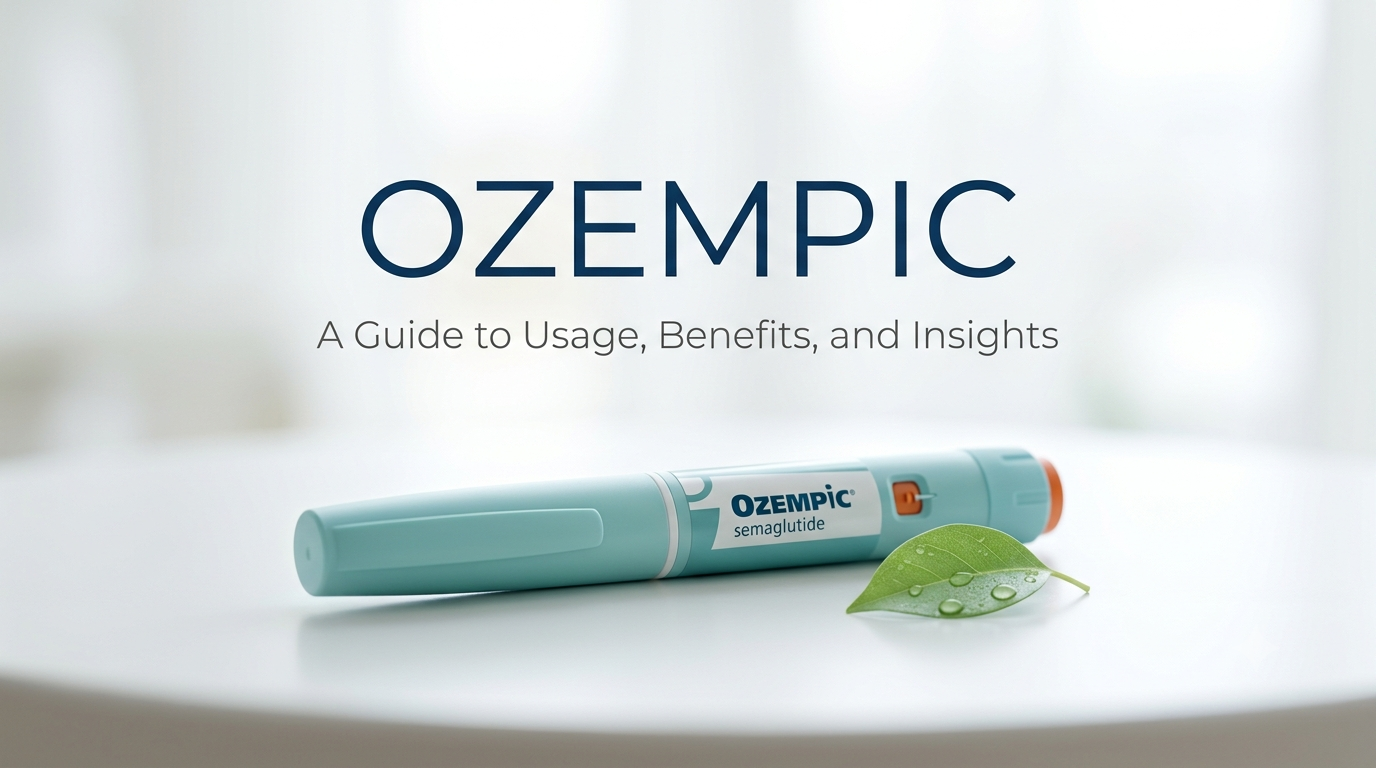
Ozempic – 15% weight reduction? : Uses, Weight Loss, Dosage, Side Effects & Complete Guide
Introduction of Ozempic
Ozempic has become one of the most talked prescription medications in recent years, not only for managing type 2 diabetes but also for its effects on weight loss. From celebrity headlines to social media discussions, interest in Ozempic has surged as more people seek effective ways to improve their health and manage obesity.
But what exactly is this Ozempic, and why has it attracted so much attention? Is it safe? Who should use it? And how does it actually work inside the body?
In this comprehensive guide, we’ll explore everything you need to know about Ozempic, including its mechanism of action, approved uses, benefits, potential side effects, dosage, cost, and the latest research. Whether you’ve recently been prescribed Ozempic or are simply looking for reliable, evidence based information, this article will help you to understand the facts about Ozempic AKA Semaglutide.
What is Ozempic
Ozempic is the brand name for semaglutide, a prescription medication that belongs to a class of Glucagon-like peptide-1 (GLP-1) receptor agonists. It is administered as a once-weekly subcutaneous injection and is primarily approved for improving blood glucose control in adults with type 2 diabetes mellitus. We cannot use ozempic or semaglutide for the T1 DM, because in T1, the level of insulin in our body is low or absent, but this drug needs functional Insulin to present inside the body. So it has no action on T1 DM, only used in T2 DM. It also reduces the risk of major cardiovascular events, such as heart attack and stroke in adults with and already established cardiovascular patients. (Another drug Dapagliflozin and Empagliflozin from SGLT-2 inhibitor group also found to be cardio protective & help to reduce weight)
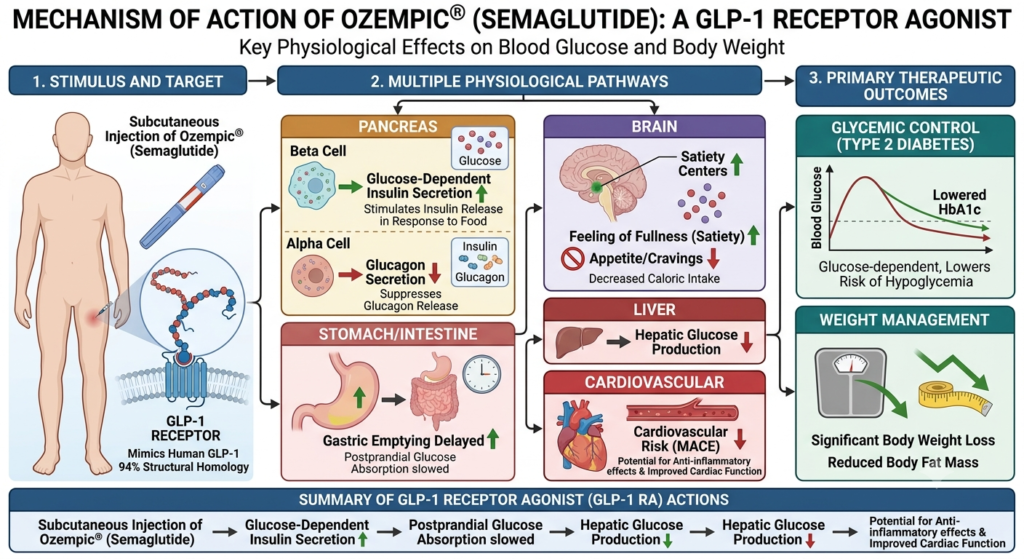
Semaglutide works by mimicking the natural GLP-1 hormone produced in the intestine after food intake. This hormone stimulates insulin secretion from pancreas when blood glucose levels are elevated, suppresses glucagon release, slows gastric emptying, and increases feelings of fullness. Together, these effects help lower blood sugar levels and reduce appetite, which explains why many patients also experience significant weight loss during treatment.
Although Ozempic has gained widespread attention for its weight-loss effects, it is important to remember that it was originally developed and approved as a treatment for type 2 diabetes. Any use for weight management should be based on current regulatory approvals and under the guidance of a qualified healthcare professional because weight reduction is a side effect not the primary function.
Ozempic vs wegovy vs Rybelsus
| OZEMPIC | WEGOVY | RYBELSUS | |
| Active Ingredients | Semaglutide | Semaglutide | Semaglutide |
| FDA approval | T2 DM | Weight management | T2 DM |
| Max dose | Max 2 mg/week | Max 2.4 mg/wk | Max 14 mg/daily |
| Route | Injection | Injection | Oral |
| Cardiovascular effect | Yes | Yes | Yes |
| Maker | Novo Nordisk | Novo Nordisk | Novo Nordisk |
Now you must be thinking if both Ozempic & Wegovy having same active ingredient which is semaglutide, then why one is approved for T2DM, and another approved for Weight reduction !!
Novo Nordisk initially wanted a drug that can lower blood glucose and increase the insulin secretion. Further clinical trials were done and FDA approved Ozempic as a T2DM medication back in 2017.
During those trials researchers found something interesting about semaglutide. Patients were not just controlling blood sugar level but also it greatly reduced the appetite, slows down the gastric emptying, increase satiety. This sparked an idea in their brain, why not to use for weight reduction also.
How ozempic works
Ozempic contains semaglutide, a medication that mimics the action of glucagon-like peptide-1 (GLP-1), after being injected once weekly, semaglutide binds to GLP-1 receptors located in the pancreas, brain, stomach, and other tissues, producing several beneficial effects:
A. Increases Insulin Secretion
When blood glucose levels are elevated, Ozempic stimulates the pancreatic β-cells to release more insulin, this insulin decrease the blood glucose. As this effect is glucose-dependent, insulin secretion decreases as blood sugar returns to normal, reducing the risk of hypoglycaemia when used alone.
B. Reduces Glucagon Release
Ozempic suppresses the release of glucagon from pancreatic α-cells. Glucagon normally signals the liver to produce glucose, thus here low glucagon levels reduces hepatic(Liver) glucose production and helps control blood sugar.
C. Slows Gastric Emptying
Semaglutide delays the rate at which food leaves the stomach. This slows the absorption of glucose after meals, leading to smaller post-meal blood sugar spikes and promoting a prolonged feeling of fullness.
D. Reduces Appetite
Ozempic acts on the hypothalamus, increasing satiety and reducing hunger. As a result, many people naturally eat fewer calories, contributing to significant weight loss over time.
So all together, by increasing insulin secretion, reducing glucagon release, slowing gastric emptying, and decreasing food intake, Ozempic effectively lowers both fasting and postprandial blood glucose levels. It also reduces HbA1c and has been shown to lower the risk of major cardiovascular events in eligible adults with type 2 diabetes and established cardiovascular disease.
Who should take it
Though the active ingredients are same in both Ozempic and Wegovy, the uses are totally different from each other
OZEMPIC
- Adult with type 2 diabetes.
- Adult with T2DM with Cardio Vascular problems.
WEGOVY
- Obese patients (BMI >30 kg/m2)
- Obese patient (BMI>27 kg/m2) with obesity related problems like hypertension, type 2 diabetes, Dyslipidemia , obstructive sleep apnoea..
How much weight can be reduced?
Weight loss with Ozempic varies from person to person and depends on the dose, duration of treatment, diet, physical activity, and importantly individual response.
OZEMPIC
Clinical trials in adults with type 2 diabetes have shown that patients typically lose:
0.5 mg/weekly: 3–4 kg
1 mg/weekly: 4–6 kg
2 mg/weekly: 6–7 kg
WEGOVY
Wegovy contains the same active ingredient (semaglutide) but is prescribed at a higher maintenance dose of 2.4 mg once weekly. clinical trials, participants lost an average of approximately 15% of their initial body weight after around 75 weeks, when combined with a reduced-calorie diet and increased physical activity.
For More Details : https://pmc.ncbi.nlm.nih.gov/articles/PMC9272494
General Side effects
- Nausea
- Vomiting
- Decreased appetite
- Indigestion
- Fatigue
- Bloating
Serious side effects
- Acute pancreatitis – severe, persistent abdominal pain that may radiate to the back.
- Potential risk of thyroid C-cell tumors – Because of this, Ozempic carries a boxed warning and should not be used in patients with a personal or family history of medullary thyroid carcinoma (MTC) or Multiple Endocrine Neoplasia syndrome type 2 (MEN2).
- Hypoglycaemia – particularly when used with insulin or sulfonylureas.
- Acute kidney injury – usually related to dehydration from severe vomiting or diarrhoea.
- Diabetic retinopathy – especially in patients with pre-existing diabetic eye disease
- Serious allergic reactions – including anaphylaxis and angioedema
- Delayed gastric emptying – which may worsen existing severe gastroparesis.
More About Side Effects- https://www.ozempic.com/ozempic-pen/side-effects.html
Who should avoid semaglutide
ABSOLUTELY AVOIDE
1. Have a personal or family history of medullary thyroid carcinoma (MTC).
2. Have Multiple Endocrine Neoplasia syndrome type 2 (MEN2).
3. Have had a serious allergic reaction to semaglutide or any of its ingredients.
USE WITH CAUTION
1. Patient with history of pancreatitis.
2. Patient with history gallbladder disease or gallstones.
3. Currently having severe gastrointestinal disorders, including severe gastroparesis (delayed stomach emptying).
4. Diabetes lead diabetic retinopathy may worsen.
5. Patients with kidney disease, particularly if you experience severe vomiting or diarrhoea that could lead to dehydration.
6. People who are taking insulin or sulfonylureas, as the risk of hypoglycaemia may increase.
Pregnancy and Breastfeeding
Pregnancy: Semaglutide is not recommended during pregnancy. Women planning to become pregnant should discontinue the medication at least 2 months before conception, as the drug remains in the body for several weeks.
Breastfeeding: It is unknown whether semaglutide passes into human breast milk. Discuss with your healthcare provider before using it while breastfeeding.
Dose escalation
| First Month | 0.25 mg, once/week |
| Second Month | 0.50 mg, once/week |
| Third Months | 1 mg, once/week |
| Later Months | 2 mg, once/week |
12. Ozempic bs Mounjaro
| OZEMPIC | MOUNJARO | |
| Active Ingredient | Semaglutide | Tirzepatide |
| Moa | GLP1 | GLP1 & GIP |
| FDA approved | T2DM | T2DM |
| Weight Loss | Significant | More than Ozempic |
FAQ
What is Ozempic used for?
Ozempic is a prescription medication containing semaglutide that is approved to improve blood sugar control in adults with type 2 diabetes. It is also approved to reduce the risk of major cardiovascular events in certain adults with type 2 diabetes and established cardiovascular disease.
2. Is Ozempic approved for weight loss?
No. Ozempic is not FDA-approved specifically for weight loss. However, many people lose weight while taking it. Wegovy, which contains the same active ingredient (semaglutide), is the FDA-approved formulation for chronic weight management.
3. How does Ozempic help with weight loss?
Ozempic reduces appetite, increases feelings of fullness, and slows gastric emptying, leading many people to consume fewer calories and lose weight over time.
4. How long does it take for Ozempic to work?
Blood sugar improvements may begin within the first week, although the full effect develops over several weeks as the dose is gradually increased. Weight loss is usually gradual and becomes more noticeable after a few months.
5. How much weight can you lose with Ozempic?
Weight loss varies among individuals. In clinical trials, many patients with type 2 diabetes lost approximately 3–7 kg, depending on the dose and duration of treatment.
6. What are the most common side effects of Ozempic?
The most common side effects include nausea, vomiting, diarrhoea, constipation, abdominal pain, decreased appetite, and indigestion. These symptoms often improve as the body adjusts to the medication.
7. Can Ozempic be used for type 1 diabetes?
No. Ozempic is not approved for the treatment of type 1 diabetes and should not be used as a substitute for insulin.
8. Who should not take Ozempic?
People with a personal or family history of medullary thyroid carcinoma (MTC), Multiple Endocrine Neoplasia syndrome type 2 (MEN2), or a known allergy to semaglutide should not use Ozempic.
9. What’s the difference between Ozempic and Wegovy?
Both medications contain semaglutide. Ozempic is approved for type 2 diabetes, while Wegovy is approved for chronic weight management and is prescribed at a higher maintenance dose.
10. Can Ozempic be taken with insulin?
Yes, Ozempic can be used with insulin in some patients. However, the combination may increase the risk of hypoglycaemia, so your healthcare provider may adjust your insulin dose.
11. What happens if I stop taking Ozempic?
Stopping Ozempic may lead to rising blood sugar levels in people with diabetes. If it was being used for weight management, some or all of the lost weight may gradually return unless healthy lifestyle habits are maintained.
12. Is Ozempic a lifelong medication?
It depends on the reason for treatment and your response to therapy. Some people require long-term treatment to maintain blood sugar control or weight loss, while others may have their treatment plan adjusted by their healthcare provider.
Semaglutide in india
Semaglutide has become increasingly available in India for the management of type 2 diabetes and obesity. Initially marketed by Novo Nordisk, the drug is available under different brand names depending on the indication:Ozempic,Rybelsus,Wegovy
Following the expiry of semaglutide’s patent in India in March 2026, several Indian pharmaceutical companies have launched or are launching generic semaglutide products, making treatment more affordable and accessible. Companies such as Dr. Reddy’s Laboratories, Sun Pharma, Torrent Pharmaceuticals, and others have entered the market with injectable semaglutide formulations after receiving regulatory approvals.
Despite increasing availability, semaglutide remains a prescription only medication in India. It should be used only under the supervision of a qualified healthcare professional, along with lifestyle modifications such as a healthy diet and regular physical activity.