Book Appointment Now
DIABETES MELLITUS – All 10 Drugs categories together
Physiology Of Glucose (Diabetes)
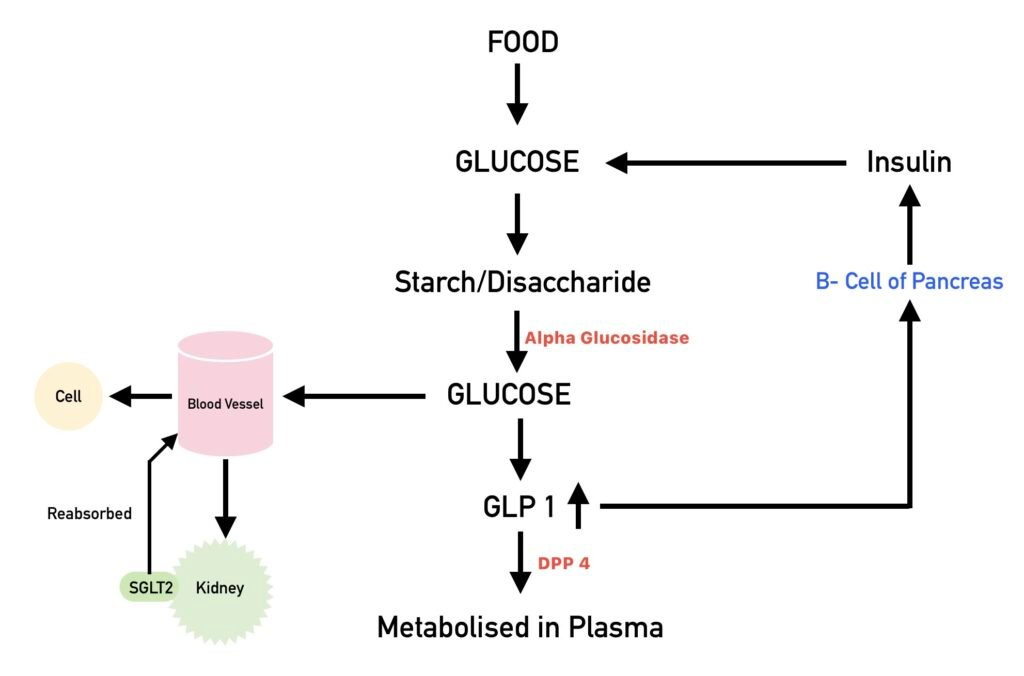
Complex carbohydrates are broken down to Glucose by Alpha-Glucosidase. This Glucose goes to the blood vessel and further to the cell or tissue for storage.
On the other hand this Glucose stimulates GLP-1 or INCRETIN to be released from the intestinal epithelial cells. GLP-1 goes to the Pancreas and stimulate the beta cell to release insulin. Which further lowers down the blood glucose level in our body. This INCRETIN is naturally secreted in our body and metabolised by DPP-4.
GLP-1 is short acting and acts on the GLP-1 receptor present in the pancreatic cells, which causes
- Release of INSULIN & AMYLIN
- Insulin acts on cells and bring GLUT -4 transporter out of the cell, helping more glucose to enter into the cell and lowering blood glucose value.
- Amylin inhibits the gastric motility and further delays the gastric emptying.
So the aim in treatment for Diabetes-
- Treat the post meal hyperglycaemia
- Maintain the blood glucose level throughout the day.
| Alpha Glucosidase inhibitor | Acarbose, Voglibose, Miglitol |
| GLP 1 Analogue | Semaglutide, Liraglutide, Dulaglutide |
| DPP 4 inhibitor | Saxagliptin, Sitagliptin |
| Amylin Analogue | Pramlintide |
| Insulin | Affreza, Lispro, Aspert, Glargine, Degludec |
| Meglitide | Rapaglinide, Mitiglinide |
| Sulfonylurease | Tolbutamide, Glimipride, Glipizide |
| Thiozolidinedion | Pioglitazone |
| Biguanide | Metformin |
| SGLT 2 Inhibitor | Dapagliflozin, Empagliflozin |
Alpha Glucosidase Inhibitor
Eg- Acarbose, Voglibose, Miglitol
These drugs are approved by FDA for the postprandial hyperglycaemia. As we can see from the picture when we take food, the complex carbohydrates are broken down to Glucose with the help of Alpha Glucosidase. With this drug, we block this conversion and keep the blood glucose level normal.
But these carbohydrates pulls water into the lumen and may cause osmotic diarrhoea, starch also make the gut liveable for bacteria which causes flatulence.
GLP 1 Analogue
Eg- Semaglutide, Liraglutide, Albiglutide, Dulaglutide
These are those most popular drugs now a days, mainly people know them as Weight reduction drug, but the main function is to lower blood glucose level. As you see it stimulate the GLP 1 secretion which lowers blood glucose. The main side effects are Weight reduction.
But there are some serious contra indications for this drug like MEDULLARY THYROID CANCER & MEN 2 syndrome. Our thyroid contains parafollicular C-Cell, which releases Calcitonin. GLP-1 receptors are present on this C-Cell. When we take GLP-1 agonist, we stimulate the C-Cell of thyroid and causes hyperplasia of C-Cell and increase Clacitonin, causing Medullary thyroid carcinoma. The reason for MEN 2 also same.
DPP-4 inhibitors
Eg- Sitagliptin, Saxagliptin, Linagliptin
DPP-4 inhibitors mainly act by increasing the GLP-1, and rest of the mechanism of action almost same except these are Weight Neutral , but the GLP-1 Analogues reduces the weight. GLP-1 & DPP-4 inhibitors only causes hypoglycaemia after oral load of glucose or in simple language, after eating food.
The main side effect of DPP-4 inhibitors is Pancreatitis. Drug specific side effects are found like Saxagliptin causes increased risk of Heart failure, vidagliptin has found to cause acute hepatitis.
All the gliptins are excreted through Kidney, except Linagliptin. Linagliptin is excreted through Liver. So Linagliptin is contraindicated in liver disease and rest all gliptins are contraindicated in Renal failure.
Amylin Analogue
Eg- Pramlintide
It mainly delays the gastric emptying so lower the glucose absorption from gut. So can be used for both T1 and T2 diabetes. It helps to lower down the body weight also.
Insulin
- Shortest – Afrezza
- Short – Lispro, Aspart, Glulisine, Regular insulin
- Intermediate – NPH
- Long – Detemir, Glargin, Degludec
Afrezza is the shortest and the fastest acting inhalation insulin. Basal insulin is required for it, can not work alone for a long time.
Lispro, Aspart, Glulisine are short but fast acting, but regular insulin is short but slow acting. Route is subcutaneous for all four
Among the long acting insulin, Degludec is the longest among three.
Short acting insulin can be given both subcutaneous and iv route but the long acting insulin mainly given in subcutaneous route.
Meglitinide
Eg- Rapaglinide, Mitiglinide
It increases the insulin secretion by blockage of ATP sensitive potassium channel of pancreas.
Sulfonylurease (SFU)
Eg- Tolbutamide, Chlorpropamide, Glynuride, Gliclazide
First two are the 1st generation SFU, which has more side effects. The later two are the 2nd generation SFU with lower individua side effects.
Chlorpropamide causes the SYNDROME OF INAPPROPRIATE ANTIDIURETIC HORMONE (SIADH) which cause hyponatremia without any edema .
Meglitinide & SFU increases the endogenous insulin, so if we check the c-peptide level, it will be increased. On the other hand, if we provide exogenous insulin, and check the c-peptide level, it will be normal or low. It becomes important to check the c-peptide because many times bodybuilders, and athletes have abused insulin because it is an anabolic hormone that can increase the glycogen storage and may enhance the muscle growth when combined with high carbohydrate intake and other substances.
Thiozolidinediones (Thio-Zoli-dine-diones)
Eg- Pioglitazone
It acts on PPAR-gumma which helps in increasing the production of GLUT-1 & GLUT-4, thus helps in decreasing the insulin resistance. It also increases the adipocyte proliferation so weight gain is seen due to this drug.
Pioglitazone is the only drug which is found in India and it comes with a black box warning, the risk of bladder Cancer, so this drug is currently banned in US. It can stimulate the epithelial sodium channel leading to sodium and water retention, leading to edema, weight gain and congestive heart failure. So this drug is contraindicated or better to say avoided in the heart failure patient, but need to remember, not all avoided in all the CVS patients in India.
Biguanide
Eg- Metformin.
The drug Metformin blocks gluconeogenesis, thus not producing any new glucose in the body, moreover, it increases the peripheral utilisation of glucose and decreases the absorption of glucose from the intestine, so decreasing the blood glucose level overall in our body.
It is one of the most used drugs currently. Metformin even can be prescribed for young children like age of 10 years old .But it also got some serious side effects like decrease calcium dependent Vitamin B12 absorption, leading to Vitamin B12 deficiency, which can cause multiple neurological disorders in our body. To treat the side effect, we recommend calcium and vitamin B12 supplementation together with Metformin. Metformin mainly excreted through kidney, so a patient with eGFR < 30. This drug should be discontinued and replaced with some other drug. If the eGFR > 30, but it is quite low compared to the normal value, the dose should be reduced.
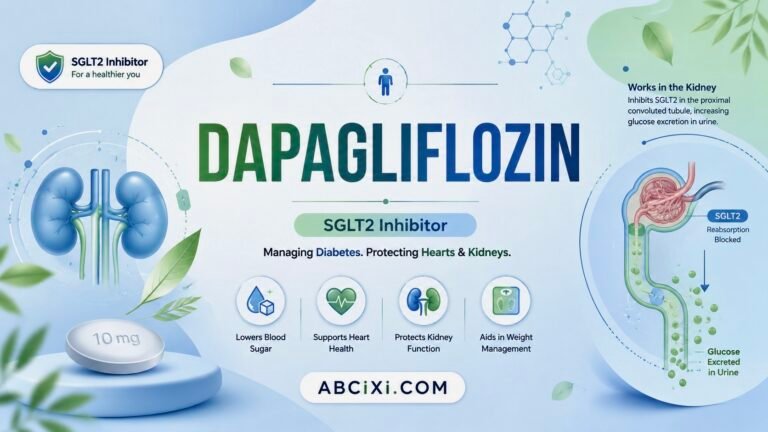
SGLT2 inhibitors
Eg- Dapagliflozin, Empagliflozin, Canagliflozin
It decreases the glucose absorption. This drug block the sodium linked glucose transporter 2 present in our kidney, so that the glucose cannot be reabsorbed into the blood vessel and it is excreted via urine. So you can get the idea, the glucose is being transported through the urinary tract. As a side effect, urinary tract infection or genital infection, like Candida is very much common in the patient who are taking this SGLT-2 inhibitors. Old patients are more prune to the infection, so it is advisable always wash your genital thoroughly after urination. It can lower the chance of urinary tract infection.
But there are drug specific side effects also, like Canagliflozin may increase the risk of bone fracture, so it is highly avoided in the patients who are showing osteoporosis. It further can increase the risk of land amputation. Dapagliglozin may cause bladder and breast carcinoma.
On the other hand,Dapagliflozin and Empagliflozin they both are cardio protective and highly recommended for the patients with diabetes associated with cardiovascular risk.
Key Takeaway
- A/W Weight Loss – GLP-1 analogue, Amylin Analogue, Metformin, SGLT-2 inhibitors
- A/W Weight gain – SFU, Meglitinide, Thiozolidinedione, Insulin
- A/W Weight Neutral – Alpha Glucosidase inhibitor, DPP-4 inhibitors
Read More : https://abcixi.com/ozempic-semaglutide/
Read More : https://www.healthline.com/health/diabetes/medications-list#type-1-diabetes