
Book Appointment Now

7 Complications of Diabetes You Should Never Ignore
Introduction
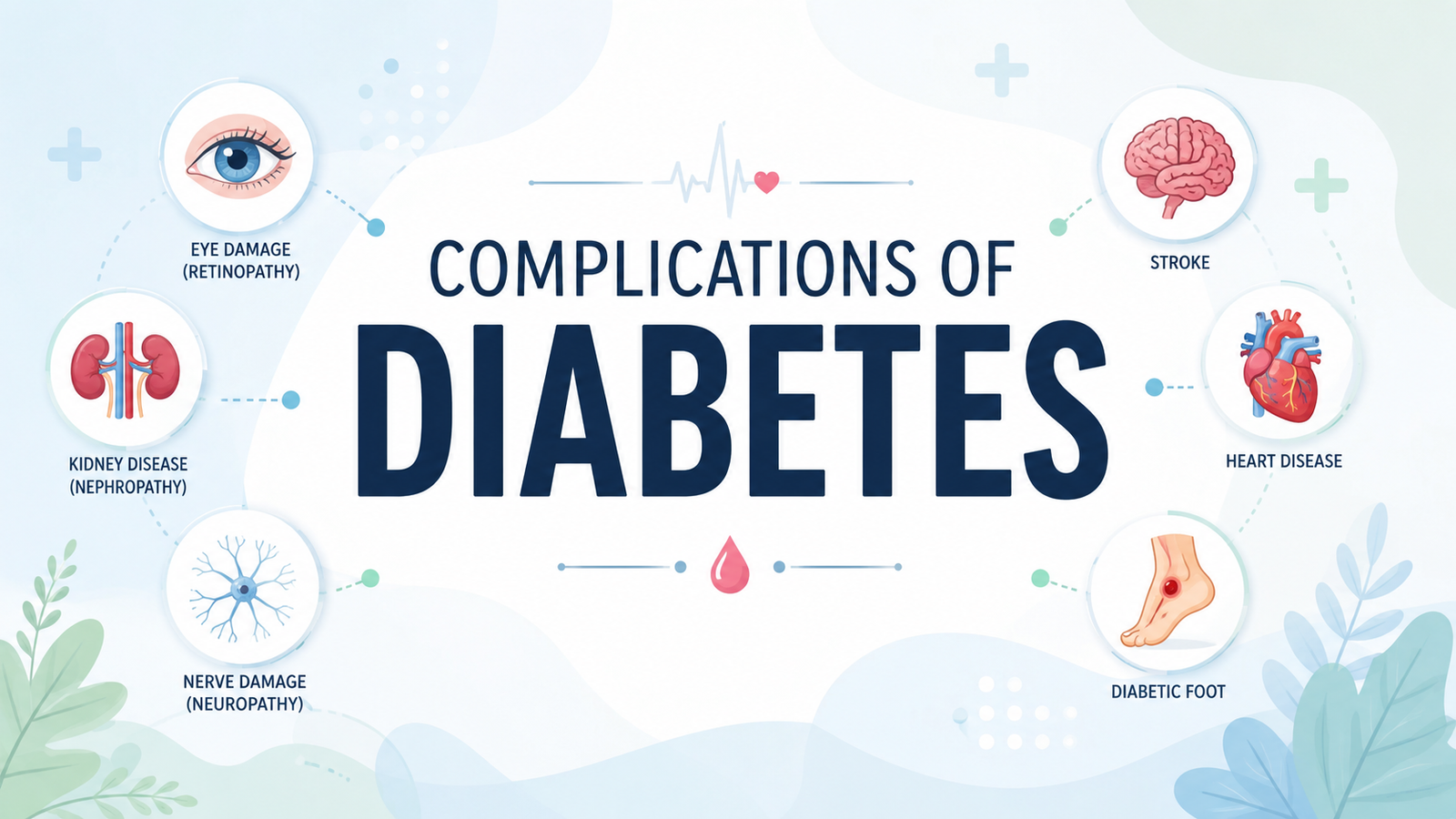
Diabetes is much more than a disease of high blood sugar. When blood glucose remains uncontrolled for a long time, it gradually damages blood vessels, nerves, and several vital organs throughout the body. These changes often develop silently over many years, and many people may not notice any symptoms until significant damage has already occurred.
The complications of diabetes are broadly classified into microvascular complications, which affect the small blood vessels (such as diabetic retinopathy, diabetic nephropathy, and diabetic neuropathy), and macrovascular complications, which affect the large blood vessels (such as coronary artery disease, stroke, and peripheral arterial disease). Diabetes also increases the risk of diabetic foot, a serious condition that results from a combination of nerve damage and poor blood circulation.
The good news is that many of these complications can be delayed or even prevented with early diagnosis, good blood sugar control, healthy lifestyle habits, regular medical check-ups, and timely treatment. Understanding these complications is the first step toward protecting your long-term health.
Diabetic nephropathy
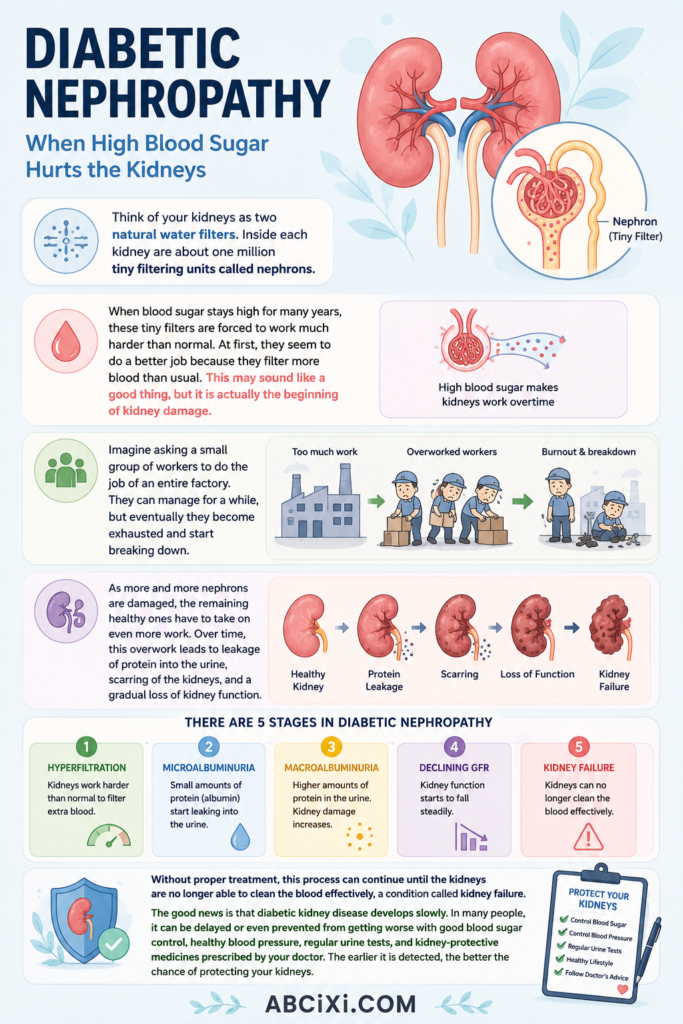
Think of your kidneys as two natural water filters. Inside each kidney are about one million tiny filtering units called nephrons.
When blood sugar stays high for many years, these tiny filters are forced to work much harder than normal. At first, they seem to do a better job because they filter more blood than usual. This may sound like a good thing, but it is actually the beginning of kidney damage.
Imagine asking a small group of workers to do the job of an entire factory. They can manage for a while, but eventually they become exhausted and start breaking down.
As more and more nephrons are damaged, the remaining healthy ones have to take on even more work. Over time, this overwork leads to leakage of protein into the urine, scarring of the kidneys, and a gradual loss of kidney function.
Without proper treatment, this process can continue until the kidneys are no longer able to clean the blood effectively, a condition called kidney failure.
There are 5 stages in Diabetic Nephropathy
Stage 1 – High blood sugar increases blood flow into the kidneys and activates several hormones and growth factors. These changes widen the incoming (afferent) blood vessel, causing the kidneys to filter more blood than normal. This increased filtration is called hyperfiltration.
Stage 2 – In stage 2, we see microalbuminuria and Blood pressure changes in the patient. This proteinuria and microalbuminuria happens due to the increased glomerular pressure as the renal autoregulation is lost due to hyperfiltration.
Stage 3 – Small amounts of protein (microalbumin) begin to leak into the urine. Protein in the kidney tubules triggers inflammation and activates substances such as TGF-β, which gradually cause scarring (fibrosis). Blood pressure also becomes more difficult to control, so ACE inhibitors or ARBs are commonly prescribed to protect the kidneys.
Stage 4 – serum creatinine starts to increase in stage four. One characteristic finding of diabetic nephropathy is the nodular glomerular sclerosis(Kimmelsteil wilson nodule) on biopsy. it is seen in almost 50 to 60% of the patients.
Stage 5 – GFR falls below 15 mL/min/1.73 m² and the kidneys can no longer adequately remove waste products. Dialysis or kidney transplantation may become necessary.
The good news is that diabetic kidney disease develops slowly. In many people, it can be delayed or even prevented from getting worse with good blood sugar control, healthy blood pressure, regular urine tests, and kidney-protective medicines prescribed by your doctor. The earlier it is detected, the better the chance of protecting your kidneys.
Read More about Diabetic Nephropathy: https://www.mayoclinic.org/diseases-conditions/diabetic-nephropathy/symptoms-causes/syc-20354556
Diabetic neuropathy
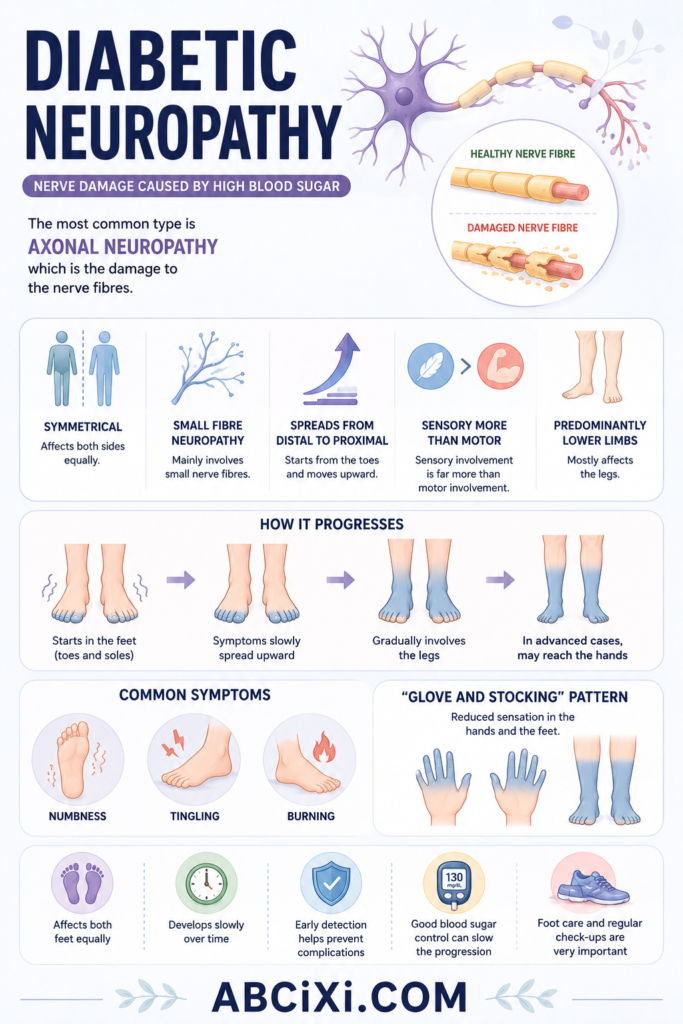
The most common type of diabetic neuropathy is the axonal neuropathy, which is the damage to the nerve fibres. This is symmetrical and small fibre neuropathy which spreads from Digital to proximal and the involvement of sensory is far more than the motor involvement. It is predominantly seen in the lower limbs. This nerve problem usually affect both feets equally and slowly spread upward. Symptoms like numbness, tingling, or burning are more common than weakness. It mainly affects the legs and causes a “glove and stocking” pattern of reduced sensation in the hands and the feet.
For the doctors, we always look for the corresponding vascular damages, because vascular damages are very much prominent with diabetes. More severe neuropathy can lead to the joint destruction, causing, Charcot Arthropathy, where the metatarso-phalangeal joints are mostly involved.
Autonomic neuropathy is quite common in later stages as of diabetes. Gastric manifestations including gastroparesis, diarrhoea at night, constipation due to reduced gut motility, gustatory sweating are most common. Resting tachycardia, erectile dysfunction, retrograde ejaculation ,neurological bladder are also common. Due to the neurological bladder, the bladder may not empty properly, causing difficulty passing urine, a week urine stream, feeling that the bladder is not fully empty or frequent urination infection.
Here, one of the most dangerous manifestations is hypovolemic unawareness. The usual warning sign of low blood glucose, such as sweating, shaking, or palpitation may not occur, making severe hypoglycaemia more likely and potentially life threatening
Management
The most important part in management of the diabetic neuropathy is maintaining a good blood sugar control to prevent further nerve damage. Patients should examine their feet daily, wear comfortable footwear and avoid walking barefoot to reduce the risk of ulcer and injuries. Pain can be treated with medications. Regular exercise, smoking cessation, and limiting alcohol intake may also help to improve the nerve health and reduce symptom. Early treatment of the foot and regular follow-up are essential to prevent the complications. Drugs include Gabapentin, SSRI, TCA, Carbamazepine, phenytoin.
know More About Diabetic Neuropathy : https://www.mayoclinic.org/diseases-conditions/diabetic-neuropathy/symptoms-causes/syc-20371580
Diabetic retinopathy
Diabetic retinopathy is one of the most common complications of diabetes and a leading cause of preventable vision loss. The longer a person has diabetes, the greater the risk of developing diabetic retinopathy, especially if blood sugar, blood pressure, or cholesterol levels remain poorly controlled.
When should screening begin?
In the past, people with Type 1 diabetes were usually advised to have their first eye examination 5 years after diagnosis, while people with Type 2 diabetes were advised to undergo screening at the time of diagnosis, as they may have had diabetes for several years before it was detected.
However, current guidelines recommend that everyone with diabetes should undergo regular retinal screening, usually once every year, although the exact interval may vary depending on the individual’s risk and previous eye examination findings.
Why does diabetic retinopathy occur?
Think of the retina as the camera sensor of your eye. It needs a constant supply of healthy blood vessels to function properly.
When blood sugar remains high for many years, it damages these tiny blood vessels. Excess glucose activates several harmful pathways, including the accumulation of sorbitol and the production of reactive oxygen species (ROS). These substances injure the blood vessel walls and damage specialized supporting cells called pericytes, which normally help maintain the strength of retinal capillaries.
As these capillaries become weak, they begin to leak fluid and blood. Some blood vessels may even become blocked, reducing the oxygen supply to the retina (retinal hypoxia).
In response to this lack of oxygen, the retina releases Vascular Endothelial Growth Factor (VEGF). VEGF stimulates the growth of new blood vessels in the retina. Unfortunately, these newly formed vessels are fragile and abnormal. They bleed easily, leading to vision loss and, if left untreated, can eventually cause retinal detachment.
Types of diabetic retinopathy
According to the Early Treatment Diabetic Retinopathy Study (ETDRS), diabetic retinopathy is broadly classified into:
1. Non-Proliferative Diabetic Retinopathy (NPDR)
This is the early stage of diabetic retinopathy. The retinal blood vessels become weak and leaky, but no new blood vessels are formed. Treatment mainly focuses on:
- Good blood sugar control
- Blood pressure and cholesterol management
- Regular eye examinations to monitor disease progression
2. Proliferative Diabetic Retinopathy (PDR)
This is the advanced stage of the disease. New, fragile blood vessels develop on the retina, increasing the risk of bleeding into the eye, retinal detachment, and permanent vision loss.
The standard treatment is pan-retinal photocoagulation (PRP) laser therapy, which helps shrink these abnormal blood vessels and reduces the risk of severe vision loss. In many patients, anti-VEGF injections (such as ranibizumab, aflibercept, or bevacizumab) are also commonly used, either alone or in combination with laser treatment.
Coronary Artery Disease
Your heart depends on a steady supply of oxygen-rich blood through the coronary arteries. Unfortunately, diabetes can gradually damage these blood vessels, making people with diabetes much more likely to develop coronary artery disease (CAD).
When blood sugar remains high for many years, it injures the inner lining of the arteries. This damage allows cholesterol and inflammatory cells to build up inside the blood vessel wall, forming fatty plaques. Over time, these plaques narrow the arteries and reduce blood flow to the heart. If a plaque suddenly ruptures, it can completely block the artery, leading to a heart attack (myocardial infarction).
One important thing to remember is that heart disease in people with diabetes may not always cause typical chest pain. Because diabetes can damage the nerves that carry pain signals (autonomic neuropathy), some people experience only unusual symptoms such as shortness of breath, unusual tiredness, nausea, dizziness, or even no symptoms at all. This is known as a silent heart attack.
The good news is that the risk of heart disease can be significantly reduced. Keeping your blood sugar, blood pressure, and cholesterol under good control, avoiding smoking, exercising regularly, maintaining a healthy weight, and eating a heart-healthy diet all play a major role in protecting your heart.
Remember: Diabetes affects much more than your blood sugar. Taking care of your heart is just as important as controlling your glucose levels.
Stroke
A stroke occurs when the blood supply to a part of the brain is suddenly interrupted. Without enough oxygen and nutrients, brain cells begin to die within minutes. People living with diabetes have a significantly higher risk of stroke than those without diabetes, especially if their blood sugar, blood pressure, or cholesterol levels are not well controlled.
High blood sugar gradually damages the inner lining of blood vessels throughout the body, including those that supply the brain. Over time, cholesterol and inflammatory cells accumulate inside these damaged vessels, forming fatty deposits called plaques. These plaques narrow the arteries and reduce blood flow. If a plaque ruptures or a blood clot blocks a brain artery, an ischemic stroke occurs, which is the most common type of stroke. Less commonly, a weakened blood vessel may burst, causing a hemorrhagic stroke.
The symptoms of a stroke usually appear suddenly. A person may develop weakness or numbness on one side of the body, difficulty speaking or understanding speech, blurred or loss of vision, dizziness, loss of balance, or a severe headache. Because every minute counts, a stroke is a medical emergency. Delaying treatment can result in permanent brain damage, disability, or even death.
A simple way to recognize a stroke is the FAST test:
F – Face: Ask the person to smile. Is one side of the face drooping?
A – Arms: Ask them to raise both arms. Does one arm drift downward?
S – Speech: Is the speech slurred or difficult to understand?
T – Time: If you notice any of these signs, seek emergency medical care immediately.
Peripheral Artery Diaseas
Peripheral Arterial Disease (PAD) is a condition in which the arteries supplying blood to the legs and feet become narrowed due to the buildup of fatty deposits (atherosclerosis). It is one of the most common cardiovascular complications of diabetes and often develops gradually over many years.
Persistently high blood sugar damages the inner lining of blood vessels, making it easier for cholesterol, inflammatory cells, and calcium to accumulate within the arterial wall. As these deposits grow, the arteries become narrower, reducing blood flow to the muscles and tissues of the legs. In addition, diabetes is often associated with high blood pressure, abnormal cholesterol levels, and smoking, all of which further increase the risk of PAD.
In the early stages, many people may not notice any symptoms. As the disease progresses, the most common symptom is pain, cramping, or tiredness in the calf, thigh, or buttock while walking, which usually improves after a few minutes of rest. This symptom is known as intermittent claudication. In more advanced disease, blood flow may become so poor that pain occurs even while resting, particularly at night.
Because diabetes can also damage the nerves of the feet (diabetic neuropathy), some patients may not feel pain despite having severe PAD. Instead, they may notice cold feet, pale or bluish skin, slow-healing wounds, foot ulcers, loss of hair over the legs, weak or absent pulses, or black discoloration of the toes due to tissue death (gangrene).
Peripheral Arterial Disease is an important cause of diabetic foot ulcers and is one of the major reasons why some patients require lower-limb amputations. Early recognition and timely treatment are essential to improve blood flow, promote wound healing, preserve the affected limb, and reduce the risk of disability. Many patients with PAD also have a higher risk of heart attack and stroke, making it an important marker of widespread atherosclerotic disease.
Diabetic foot
A diabetic foot develops due to the combined effects of diabetic neuropathy and Peripheral Arterial Disease (PAD). Nerve damage reduces the ability to feel pain, heat, or injury, so small cuts, blisters, or pressure sores may go unnoticed. At the same time, poor blood supply delays wound healing and increases the risk of infection. As a result, a minor injury can progress into a foot ulcer, deep infection, or even gangrene if left untreated. Regular foot examination, proper footwear, daily foot care, and prompt medical attention for any wound are essential to prevent serious complications, including lower-limb amputation.