
Book Appointment Now


Tirzepatide : Use, Dose,Dangerous Side Effects, Warnings and Patient Guide
What is Tirzepatide?
Tirzepatide is a first-in-class dual glucose-dependent insulinotropic polypeptide (GIP) and glucagon-like peptide-1 (GLP-1) receptor agonist approved for the treatment of Type 2 diabetes mellitus. By targeting two incretin pathways simultaneously, it improves glycemic control through enhanced glucose-dependent insulin secretion, reduced glucagon release, delayed gastric emptying, and appetite suppression. In addition to lowering blood glucose levels, tirzepatide has demonstrated significant benefits in promoting weight loss and improving metabolic health. This article provides a comprehensive overview of tirzepatide, including its mechanism of action, indications, dosage, adverse effects, contraindications, drug interactions, monitoring, and important clinical considerations.
How Does Tirzepatide Work for Weight Loss and Type 2 Diabetes?
Tirzepatide is a dual incretin receptor agonist that activates both the glucose dependent insulinotropic polypeptide (GIP) receptor and the glucagon like peptide-1 (GLP-1) receptor.
Unlike traditional GLP-1 receptor agonists, Tirzepatide selectively binds to and stimulates both receptors, allowing them to work together to improve blood glucose regulation.
When blood glucose levels rise after a meal, tirzepatide enhances both the first-phase and second-phase insulin secretion from pancreatic beta-cells. This increased insulin release occurs in a glucose dependent manner, meaning the medication stimulates insulin secretion only when blood sugar levels are elevated, thereby reducing the risk of hypoglycemia.
At the same time, Tirzepatide suppresses the release of glucagon from pancreatic alpha-cells, also in a glucose dependent manner. Lower glucagon levels reduce hepatic glucose production, further contributing to improved glycemic control.
By simultaneously enhancing insulin secretion and reducing glucagon release only when needed, Tirzepatide effectively lowers blood glucose while maintaining a favorable safety profile.
Read More About all Diabetic Drugs : https://abcixi.com/diabetes-mellitus-medicine/
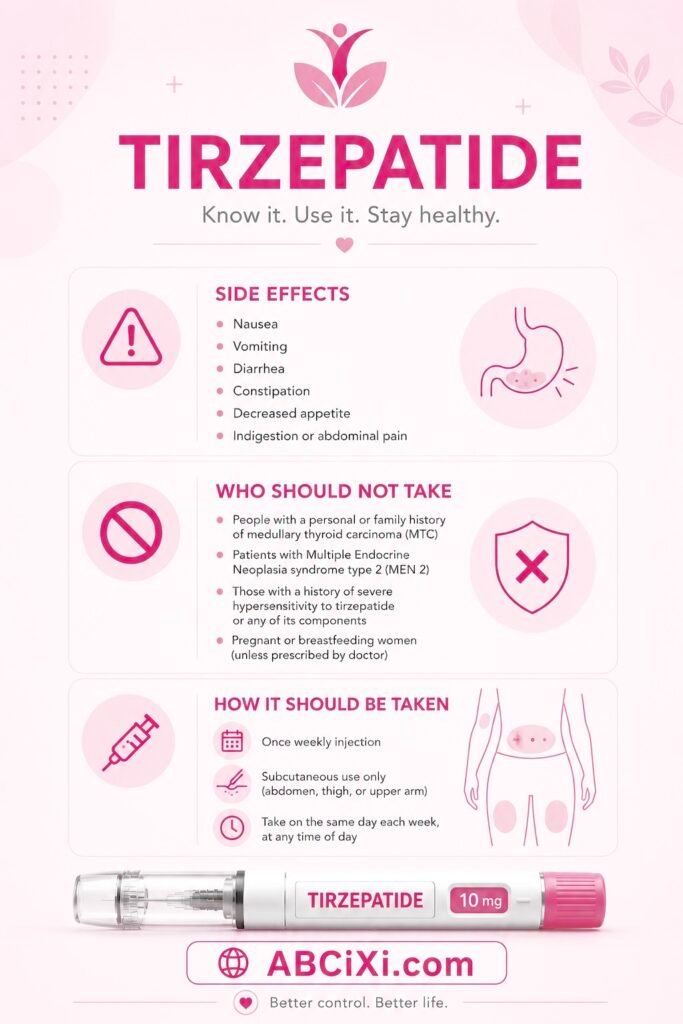
What Are the Side Effects of Tirzepatide ?
Like all medications, Tirzepatide may cause side effects, although most are mild to moderate and tend to improve as the body adapts to treatment.
The most common adverse effects are gastrointestinal in nature and include Nausea, Diarrhea, decreased Appetite, Vomiting, Dyspepsia (Indigestion), Constipation, and Abdominal Pain. These symptoms are generally more pronounced during the initial weeks of therapy or after dose escalation and often diminish over time.
Although the risk is relatively low when used alone, severe hypoglycemia can occur, particularly when Tirzepatide is used in combination with insulin or insulin secretagogues such as Sulfonylureas. Patients receiving these medications may require dose adjustments to minimize the risk of low blood glucose.
Tirzepatide has also been associated with Gallbladder and Biliary disorders, including Cholelithiasis (Gallstones) and Biliary Colic. In some cases, these complications may progress to the point where Cholecystectomy (surgical removal of the Gallbladder) becomes necessary.
Because Tirzepatide is administered as a subcutaneous injection, injection-site reactions such as redness, pain, itching, swelling, or mild irritation may occur. These reactions are usually self-limiting and resolve without specific treatment.
How does Tirzepatide Interact with Other Medications?
Tirzepatide can interact with certain medications, particularly those that affect blood glucose levels or rely on predictable gastrointestinal absorption. Healthcare providers should carefully review a patient’s medication list before initiating therapy.
1. Insulin and Insulin Secretagogues
When Tirzepatide is used together with Insulin or Insulin secretagogues (e.g., Sulfonylureas), the risk of severe hypoglycemia increases. To minimize this risk, clinicians should consider reducing the dose of Insulin or the Sulfonylurea when initiating Tirzepatide. Patients should also be educated about the signs and symptoms of hypoglycemia and advised to monitor their blood glucose regularly.
2. Oral Medications
Tirzepatide delays gastric emptying, which may alter the absorption of orally administered medications. Although this effect is generally not clinically significant for most drugs, caution is advised for medications with a narrow therapeutic index, where small changes in drug concentration can affect safety or efficacy.
Patients taking drugs such as Warfarin should be monitored appropriately, particularly during the initiation of Tirzepatide and after dose escalation, to ensure the desired therapeutic effect is maintained.
3. Oral Hormonal Contraceptives
Because delayed gastric emptying may reduce the absorption of oral hormonal contraceptives, women using oral birth control pills should be advised to switch to a non-oral contraceptive method or use an additional barrier method of contraception for 4 weeks after starting tirzepatide and for 4 weeks after each dose escalation.
Importantly, non-oral hormonal contraceptives, such as Injectable, Implantable, Transdermal, or Intrauterine contraceptives, are not expected to be affected by Tirzepatide.
Who Should Not Take Tirzepatide ?
Tirzepatide should not be used in the following patients, as the risks may outweigh the potential benefits:
1. Hypersensitivity
Tirzepatide is contraindicated in patients with a known serious Hypersensitivity to Tirzepatide or to any of the excipients (inactive ingredients) in the formulation. Serious allergic reactions, including Anaphylaxis and Angioedema, have been reported and require immediate discontinuation of the drug and appropriate medical treatment.
2. Personal or Family History of Medullary Thyroid Carcinoma (MTC) or MEN 2
Tirzepatide is contraindicated in patients with a personal or family history of medullary thyroid carcinoma (MTC) or in those with Multiple Endocrine Neoplasia syndrome type 2 (MEN 2).
This contraindication is based on findings from animal studies, in which tirzepatide caused thyroid C-cell tumors. Although it is not known whether this risk applies to humans, the medication should be avoided in these high-risk individuals as a precaution.
What Are The Serious Risks of Tirzepatide?
tirzepatide is generally well tolerated, certain serious adverse events have been reported or are considered potential risks. Patients should be carefully evaluated before and during treatment.
1. Thyroid C-Cell Tumors
Tirzepatide carries a boxed warning regarding the potential risk of thyroid C-cell tumors, including medullary thyroid carcinoma (MTC). This warning is based on findings from animal studies, and it is currently unknown whether the same risk exists in humans. Tirzepatide should not be used in patients with a personal or family history of MTC or Multiple Endocrine Neoplasia syndrome type 2 (MEN 2).
2. Acute Pancreatitis
Cases of acute pancreatitis, including fatal and non-fatal hemorrhagic or necrotizing pancreatitis, have been reported in patients receiving GLP-1 receptor agonists. Patients should be advised to seek immediate medical attention if they develop persistent, severe abdominal pain, with or without vomiting. If pancreatitis is suspected, tirzepatide should be discontinued promptly.
3. Hypoglycemia
The risk of hypoglycemia increases when tirzepatide is used in combination with insulin or insulin secretagogues, such as sulfonylureas. Dose reduction of these agents may be necessary to minimize the risk of severe hypoglycemia.
4. Hypersensitivity Reactions
Serious hypersensitivity reactions, including anaphylaxis and angioedema, have been reported. Tirzepatide should be discontinued immediately if a severe allergic reaction occurs. Patients with a previous history of angioedema or anaphylaxis to other GLP-1 receptor agonists should use tirzepatide with caution, as it is unknown whether they are at increased risk.
5. Severe Gastrointestinal Disease
Because tirzepatide delays gastric emptying and commonly causes gastrointestinal adverse effects, it should be used with caution in patients with severe gastrointestinal disease. Its use has not been studied in patients with severe gastroparesis, and therefore it is not recommended in such individuals.
6. Acute Kidney Injury
Acute kidney injury has been reported, particularly in patients who develop severe nausea, vomiting, diarrhea, or dehydration. Renal function should be monitored in patients at risk, especially during treatment initiation and dose escalation.
7. Diabetic Retinopathy Complications
Rapid improvement in blood glucose levels may temporarily worsen diabetic retinopathy. Patients with a history of diabetic retinopathy should undergo appropriate ophthalmologic monitoring while receiving tirzepatide.
8. Gallbladder Disease
Treatment with tirzepatide has been associated with acute gallbladder disease, including cholelithiasis (gallstones) and cholecystitis. Patients presenting with persistent upper abdominal pain, fever, or jaundice should be evaluated promptly for gallbladder disorders.
FDA BOXED WARNING for Tirzepatide ?
Tirzepatide carries a boxed warning for the potential risk of thyroid C-cell tumors.
In animal studies, tirzepatide caused thyroid C-cell tumors in rats. However, it is currently unknown whether tirzepatide causes thyroid C-cell tumors, including medullary thyroid carcinoma (MTC), in humans. Because of this potential risk, the drug should be prescribed with caution and only after appropriate patient selection.
Tirzepatide is contraindicated in patients with:
– A personal or family history of medullary thyroid carcinoma (MTC), or
– Multiple Endocrine Neoplasia syndrome type 2 (MEN 2).
Patients should be advised to report symptoms that may suggest a thyroid tumor, such as a neck mass, difficulty swallowing (dysphagia), persistent hoarseness, or shortness of breath. Although routine monitoring with serum calcitonin levels or thyroid ultrasound has not been proven to be effective for the early detection of MTC in patients receiving tirzepatide, any suspicious clinical findings should be evaluated promptly.
How Should Tirzepatide be Taken?
Tirzepatide is administered as a subcutaneous injection once weekly. It can be given at any time of the day, with or without meals, making it convenient for most patients.
Administration
Tirzepatide should be injected into the abdomen, thigh, or upper arm. To minimize the risk of injection-site reactions, patients should rotate the injection site with each dose and avoid injecting into the same location repeatedly.
For patients receiving both tirzepatide and insulin, the two medications should be administered as separate injections. Although they may be injected into the same general body region (for example, the abdomen), the injections should not be given adjacent to each other. Tirzepatide and insulin should never be mixed in the same syringe.
Missed Dose
If a dose of tirzepatide is missed, it should be administered as soon as possible within 96 hours (4 days) of the missed dose.
– If less than 4 days have passed: Administer the missed dose as soon as possible and continue the regular once-weekly dosing schedule.
– If more than 4 days have passed: Skip the missed dose and administer the next dose on the regularly scheduled day. Do not administer two doses within a short interval to make up for the missed dose.
After a missed dose, patients can resume their normal once-weekly dosing schedule without any additional adjustments.
What Is The Recommended Tirzepatide Dose for Adults?
Tirzepatide is indicated for the treatment of adults with type 2 diabetes mellitus. It is not indicated for the treatment of type 1 diabetes mellitus.
The medication is administered as a subcutaneous injection once weekly.
– Starting dose: 2.5 mg once weekly for the first 4 weeks.
– This initial dose is intended only for treatment initiation to improve tolerability and is not effective for glycemic control.
– After 4 weeks: Increase the dose to 5 mg once weekly.
If additional glycemic control is required, the dose may be increased by 2.5 mg increments after the patient has been on the current dose for at least 4 weeks.
The recommended maintenance doses are individualized based on the patient’s glycemic response and tolerability.
The maximum recommended dose is 15 mg once weekly.
If necessary, the day of weekly administration may be changed, provided that there is an interval of at least 72 hours (3 days) between two consecutive doses.
| Duration | Recommended Dose |
| Week 1-4 | 2.5 mg once weekly |
| Week 5 onwards | 5 mg once weekly |
| If additional glycemic control needed | Increase by 2.5 mg every week > 4 weeks |
| Maximum dose | 15 mg once weekly |
Can Children Take Tirzepatide ?
The safety and effectiveness of tirzepatide in pediatric patients have not yet been established. Therefore, its use is not currently recommended in children or adolescents.
When Does the Tirzepatide Does Need to Be Changed?
Hepatic Impairment
No dose adjustment is required in patients with hepatic impairment. Clinical studies have shown that hepatic dysfunction does not have a clinically significant effect on the pharmacokinetics of tirzepatide.
Renal Impairment
No dose adjustment is required in patients with renal impairment, including those with end-stage renal disease (ESRD).
However, renal function should be monitored when initiating or escalating tirzepatide therapy in patients with renal impairment, particularly if they develop severe gastrointestinal adverse effects such as nausea, vomiting, or diarrhea. These symptoms may lead to dehydration, which can precipitate acute kidney injury.
Although dose reduction is not routinely necessary, careful clinical monitoring is recommended throughout treatment, especially in patients at increased risk of renal complications.
Is It Safe During Pregnancy and Lactation ?
Pregnancy
There are no adequate and well-controlled studies evaluating the use of tirzepatide in pregnant women. Consequently, the available human data are insufficient to determine the drug-related risk of major congenital malformations, miscarriage, or adverse maternal or fetal outcomes.
Animal reproduction studies have demonstrated potential fetal harm following exposure to tirzepatide during pregnancy. Therefore, tirzepatide should be used during pregnancy only if the potential benefit to the mother justifies the potential risk to the fetus. In general, alternative therapies with established safety profiles are preferred during pregnancy.
Effect on Oral Contraceptives
Tirzepatide delays gastric emptying, which may reduce the absorption and effectiveness of oral hormonal contraceptives. This effect is most pronounced after the first dose and gradually diminishes over time.
Women using oral hormonal contraceptives should be advised to:
- Switch to a non-oral contraceptive method, or
- Use an additional barrier method of contraception for 4 weeks after initiating tirzepatide and for 4 weeks after each dose escalation.
This precaution does not apply to non-oral hormonal contraceptives, such as injectable, implantable, transdermal, or intrauterine contraceptives.
Lactation
It is not known whether tirzepatide is excreted into human breast milk, affects milk production, or has any effects on the breastfed infant, as no human data are currently available.
Therefore, the decision to use tirzepatide during breastfeeding should be made after carefully weighing the benefits of breastfeeding, the mother’s clinical need for treatment, and any potential risks to the nursing infant.
Tirzepatide Monitoring: What Should be Monitored?
1. Renal Function
Monitor renal function, particularly in patients with pre-existing kidney disease or in those who develop severe nausea, vomiting, or diarrhea, as dehydration may increase the risk of acute kidney injury.
2. Diabetic Retinopathy
Patients with a history of diabetic retinopathy should be monitored for progression or worsening of retinal disease, especially if they experience rapid improvement in glycemic control.
READ MORE ABOUT DIABETIC COMPLICATIONS
3. Hypersensitivity Reactions
Patients should be observed for signs and symptoms of hypersensitivity reactions, including rash, urticaria, angioedema, difficulty breathing, or anaphylaxis. Tirzepatide should be discontinued immediately if a serious allergic reaction occurs.
4. Thyroid Monitoring
Patients should be educated about symptoms suggestive of thyroid tumors, such as:
– A neck mass or swelling
– Persistent hoarseness
– Difficulty swallowing (dysphagia)
– Shortness of breath
Any patient who develops these symptoms or has thyroid nodules detected on physical examination or neck imaging should undergo prompt evaluation.
Routine monitoring of serum calcitonin levels or thyroid ultrasound is not recommended for all patients receiving tirzepatide, as their value in the early detection of medullary thyroid carcinoma (MTC) has not been established. However, these investigations may be considered when clinically indicated, such as in patients with suspicious thyroid findings.
Read More : https://www.mayoclinic.org/drugs-supplements/tirzepatide-subcutaneous-route/description/drg-20534045