
Book Appointment Now


Diabetic Foot : 10 Advices You Must Know
Description
DIABETIC FOOT is a common complication of diabetes caused by nerve damage (neuropathy) and poor blood circulation. These changes reduce sensation in the feet, making it difficult to notice cuts, blisters, or injuries. If left untreated, even minor wounds can become infected, develop into ulcers, and, in severe cases, lead to tissue loss or amputation. People with long-standing or poorly controlled diabetes are at higher risk. Regular foot inspections, proper footwear, good blood sugar control, and early medical attention for any foot problem can significantly reduce complications and help maintain healthy, functional feet.
Why it Happens?
Diabetic foot problems develop mainly from two long-term effects of high blood sugar: Nerve Damage and Poor Circulation
Prolonged high blood sugar levels damage peripheral nerves, a condition known as Diabetic Neuropathy. This dull sensation in the feet often go unnoticed until they have worsened. Some people also lose the ability to feel sensation of Heat, Cold, or Pain accurately, making every day injuries, easy to miss and the Cuts, Blisters or the Pressure Sores often go unnoticed.
At the same time, Diabetes damages Blood Vessels, restricting blood flow to the lower limbs – a condition known as peripheral artery disease (PAD). Reduced circulation means less oxygen and fewer nutrients reached to the feet, slowing the body’s, natural healing process. Even minor wounds can take much longer to close or fail to heal at all.
High blood sugar also weaken the immune system, making it harder to fight against the infections. Combined with poor sensation and slow healing, this creates a dangerous cycle – minor injuries go unnoticed, heals slowly and become vulnerable to infection.
Together, this factors explain why something as small as a blister can escalate into a serious ulcer or in severe cases can lead to amputation if untreated.
Common Problems
- Foot Ulcer – Open sores, usually on the sole or big toe, that heal slowly due to poor blood supply.
- Calluses and Corns – Thickened skin from pressure or friction. Cracks become the entry point for infection if ignored.
- Fungal Infection – Athlete’s foot and Toilnail fungus thrive to warm, moist areas and harder to clear due to weekend immunity.
- Dry, Cracked skin – Nerve damage reduces sweating, leaving skin prone to fissure.
- Ingrowth Toenails – Caused by improper trimming of nail or tight shoes,it raises infection risk.
- Charcot foot – Bones, weaken and fracture, sometimes changing the foot’s shape over time.
- Blisters – often go unnoticed due to numbness, worsening before they are treated.
- Foot Deformities- Hammer Toe from muscle weakening, which shift the pressure point and raise the ulcer risk.
Warning Signs
- Numbness or tingling in the feet.
- Persistent swelling.
- Skin discolouration (red, blue, or black patches).
- Sores or wounds that won’t heal.
- Unusual food odor.
- Changes in the skin temperature, unusually warm or cool areas.
- Cracked, dry or peeling skin.
- Thickened, discoloured, or ingrown toenail.
- Loss of sensation or unexplained pain.
- Pus or discharge from any wound.
Risk Factors
- Long duration Diabetes (10+ years).
- Poor blood sugar control.
- Peripheral neuropathy (nerve damage).
- Peripheral artery disease (poor circulation).
- Smoking.
- Obesity.
- High blood pressure.
- High cholesterol.
- Previous foot ulcer.
- Previous food or lake amputation.
- Foot deformities (Hammer toe,Charcot foot).
- Wearing fitting or tight shoes.
- Walking barefoot frequently.
- Poor eyesight (difficulty checking the fit properly).
- Kidney disease.
- Advanced age.
- Limited joint mobility or stiffness.
Daily Foot Care Routine
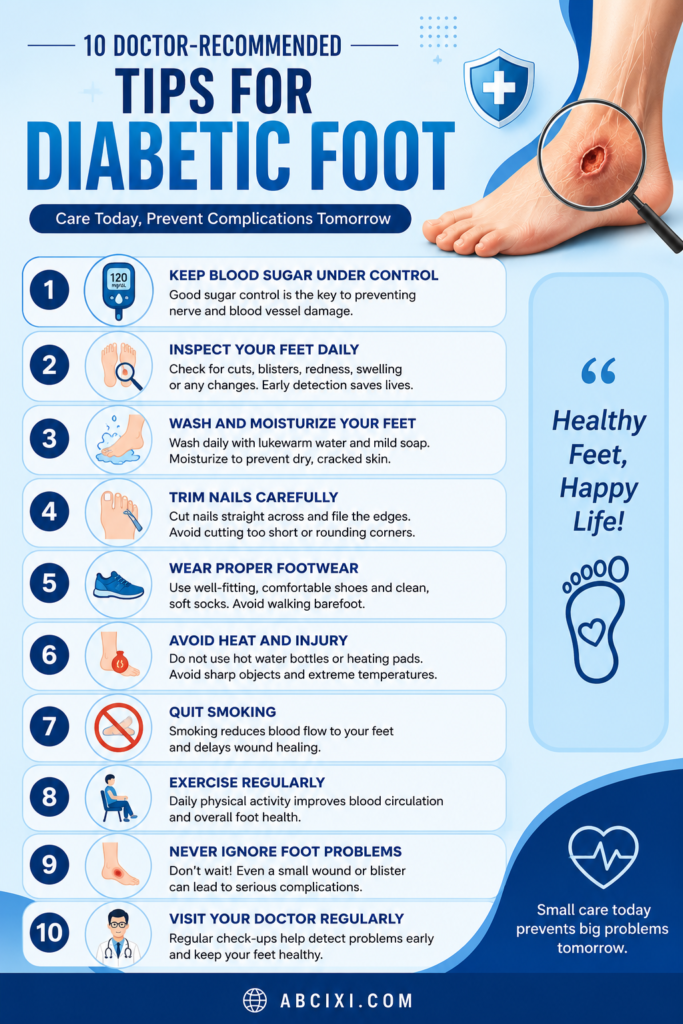
- Inspect feet every day for cuts, blisters, redness, or swelling. Use a mirror for the sole.
- Wash your feet daily in lukewarm water, never hot.
- Dry feet thoroughly, specially between the toes.
- Moisturise the feet daily, but avoid the area between the toes.
- Trim toenail straight across, cut any sharp edges.
- Never walk barefoot, indoor or outdoors.
- Wear clean, dry socks every day.
- Check inside the shoes for stone or rough stem before wearing.
- Wear properly fitted, cushion, footwear at all the time.
- Avoid tight socks or footwear that restrict the circulation.
- Elevate feet when sitting for long periods.
- Avoid direct heat source like heating pad or hot water bottle.
- Don’t self treat the corns, calluses, ingrown nails.
- Monitor the blood sugar level regularly as a part of overall care.
- Report any new wound, swelling or discolouration right away.
Footwear Guidance
Proper footwear is essential in preventing diabetic foot complications. Shoes should be well fitted with a wide toe box that avoid pressure on the toe or the bunions and should never pinch or rub.
Choosing footwear with a soft, seamless interior, lowers the risk of blister and sores, specially for feet with reduced sensation.
Diabetic patients should avoid walking barefoot, even at home, since minor injuries often go unnoticed due to nerve damage. Before wearing shoes, check inside for small stone, seams or foreign objects that could cause unnoticed wounds. Cushioned, supportive soles help reduce pressure on vulnerablr areas like the heel and ball of the foot. New shoes should be broken in gradually, worn for short periods at fast.
Diabetic socks, seamless and moisture wicking, provide extra protection. Shoes showing wear should be replaced promptly, and orthotic or professionally fitted footwear suits those with the foot deformity.
When to see a Doctor
- A foot ulcer or open wound that does not start healing within 2 to 3 days
- Redness, swelling, warmth, and increasing pain, which may indicate an infection.
- Pus, foul, smelling discharge, or bleeding from a wound.
- Black, blue, or discoloured skin, which may be a sign of poor blood supply, or tissue death.
- Fever or chills along with a foot wound infection.
- New numbness, tingling, or burning sensation in the feet.
- Loss of feeling that makes it difficult to detect the injuries.
- A cut, blister, corn, or callus that is not improving or getting worse.
- Ingrown toenails, or fungal infection that become painful, swollen, or infected.
- Difficulty walking due to foot, pain, swelling, or deformity.
- Any sudden change in the shape of the foot, which may suggest Charcot foot and required urgent evaluation.
- Repeated foot injuries or recurrent ulcers, even if they say minor
Very importantly, people with diabetes should never ignore a foot problem. Early treatment can prevent serious complications, including severe infections, hospitalisation and risk of amputations. Regular foot examination by a healthcare professional are recommended specially for those with long-standing diabetes, nerve damage and poor circulation.
Treatment Options
- Keeping the blood glucose level within the target range is essential
- The ulcer or the wound is cleaned regularly, data tissues are removed and appropriate dressings are applied to promote the healing
- If the wound is infected, your doctor may prescribe oral or intrsveners antibiotics, depending on the severity of the infection.
- Reducing pressure on the effective food, using special footwear, removable walking boots, total contact cast, crutches, or a wheelchair helps the ulcer to heal fast.
- Treatment of poor blood flow. If circulation is reduced, procedures such as Angioplasty or Bypass surgery may be needed to restore the blood supply to the foot.
- Custom diabetic shoes, insoles, and orthotic device help reduce the pressure points and prevent new ulcer.
- Management of the underlined conditions like high blood pressure, high cholesterol, and quitting smoking, improves the circulation and wound healing.
- Surgery may be required to drain abscesses, remove infected bones or dead tissue, correct the foot deformity and restore blood flow. In severe life-threatening infections, amputation may be necessary to prevent the spread of infection.
- Frequent visit to the healthcare provider are important to monitor healing, prevent recurrence, and detect new problem early.
Conclusion
Diabetic food is a serious but largely preventable complication of diabetes. Simple daily habits, such as checking your feet, wearing appropriate footwear, maintaining the good blood glucose control and seeking prompt medical attention even minor injuries, can make a significant difference. Early detection and timely treatment help prevent the infections, ulcer and in severe cases amputation also. If you have diabetes, make foot care a part of your daily routine not just an occasional task. Regular check ups with your healthcare provider and proper diabetes management at the best way to keep your feet healthy, and maintain an active independent lifestyle. Remember, protecting your feet today, can help you to avoid at serious complications in the future.
Read More : https://my.clevelandclinic.org/health/diseases/21510-diabetic-feet